Part 1: The Protest
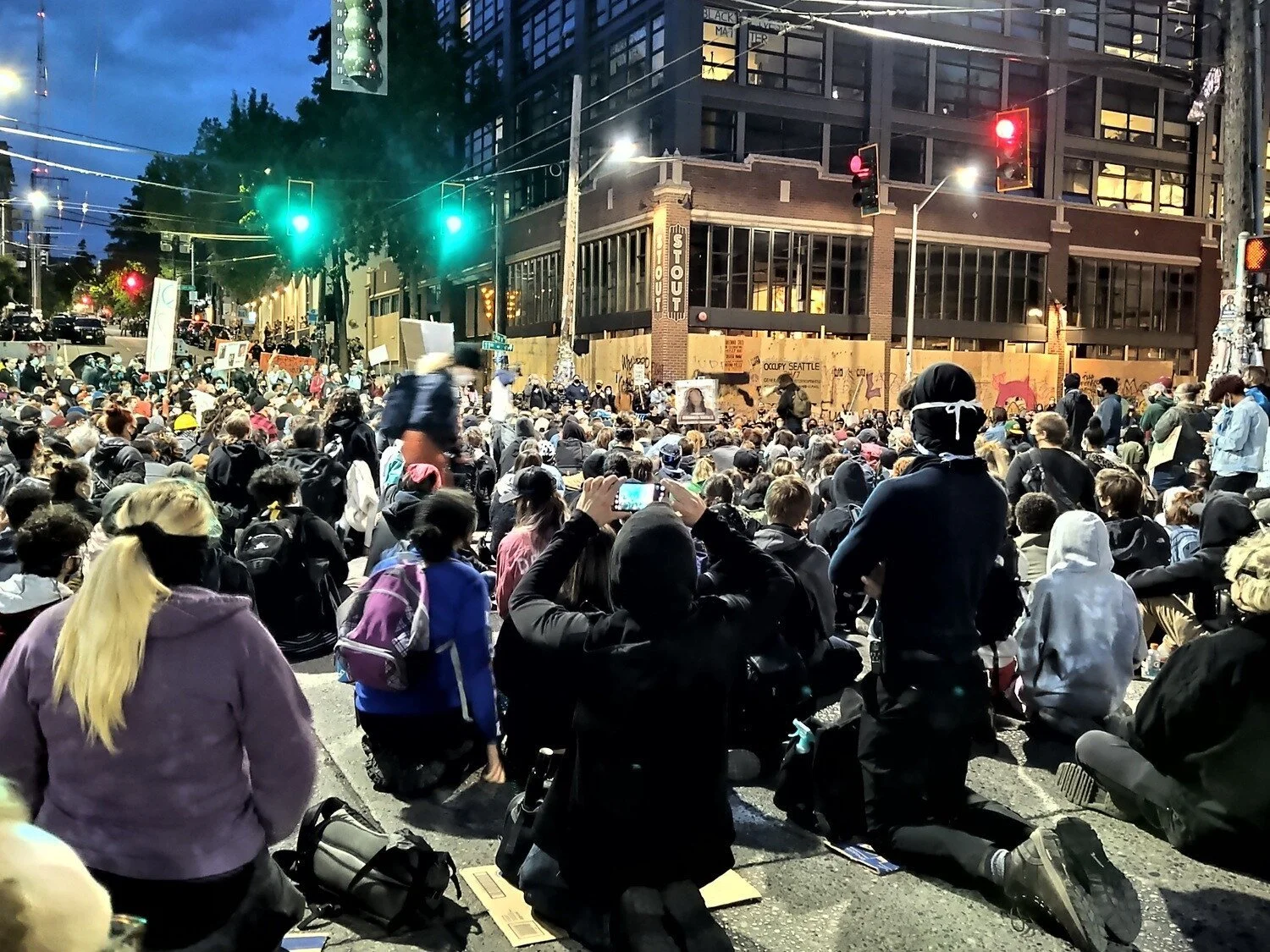
Protesters at 11th & Pine on June 05, 2020. Photos: Tarika Powell, unless otherwise specified
This is Part 1 in the series COINTELPRO in the Digital Age.
Contents: My participation in Seattle protests in June 2020; overview of protest infiltration by police and feds; police brutality during Seattle protests
Note: The essays in this series reflect the author's present recollection of events. Some names and characteristics have been changed.
I lived in Seattle from 2015-2020. I worked at a think-tank doing environmental policy research against fossil fuel developments, and before that, I was an elementary school teacher.
In June of 2020, I attended the protests as an individual, not as part of a group. I was not an organizer nor an experienced protester. I watched the video of George Floyd's murder while laying in bed one night at the end of May, shortly before I heard the first signs of protest outside my apartment in Capitol Hill. By the time I got dressed and went outside, I couldn't find the protesters. I sat on the step outside my building and cried.
The next day, May 30, 2020, I went to a protest downtown. We marched from the original location, outside a government building, to a courtyard in a commercial area called Westlake Center. The Westlake courtyard is where BLM protests often took place. It was a long walk from the original location to Westlake, and it was raining. The police kettled us in circles several times. By the time we got to Westlake, my shoes were soaked and I was hungry and tired.
Since Westlake wasn't far from my apartment, I went home to pack a snack and change my shoes. I also packed a simple first aid kit in a Ziploc bag. I had been to protests and counter-protests in Seattle where police showed up in riot gear, but I usually left when they arrived. The Seattle Police Department (SPD) is notoriously aggressive, and were at that time under a consent decree, meaning that the feds were in charge of over-sight of the police department due to police misconduct. I didn't know what to expect that day, so I packed the kit just in case.
When I got back downtown, there was a "sanctioned" protest going on in Westlake. I went there, but I was not a fan of the rhetoric I was hearing from the main speaker. I walked around the streets bordering Westlake, which were filled with people. At least one police car had been set on fire. Protesters were being harassed in several locations. That included police using their bicycles to shove people and dispersing chemical agents. Protesters including children had been maced by the cops, and there were multiple types of smoke in the air.
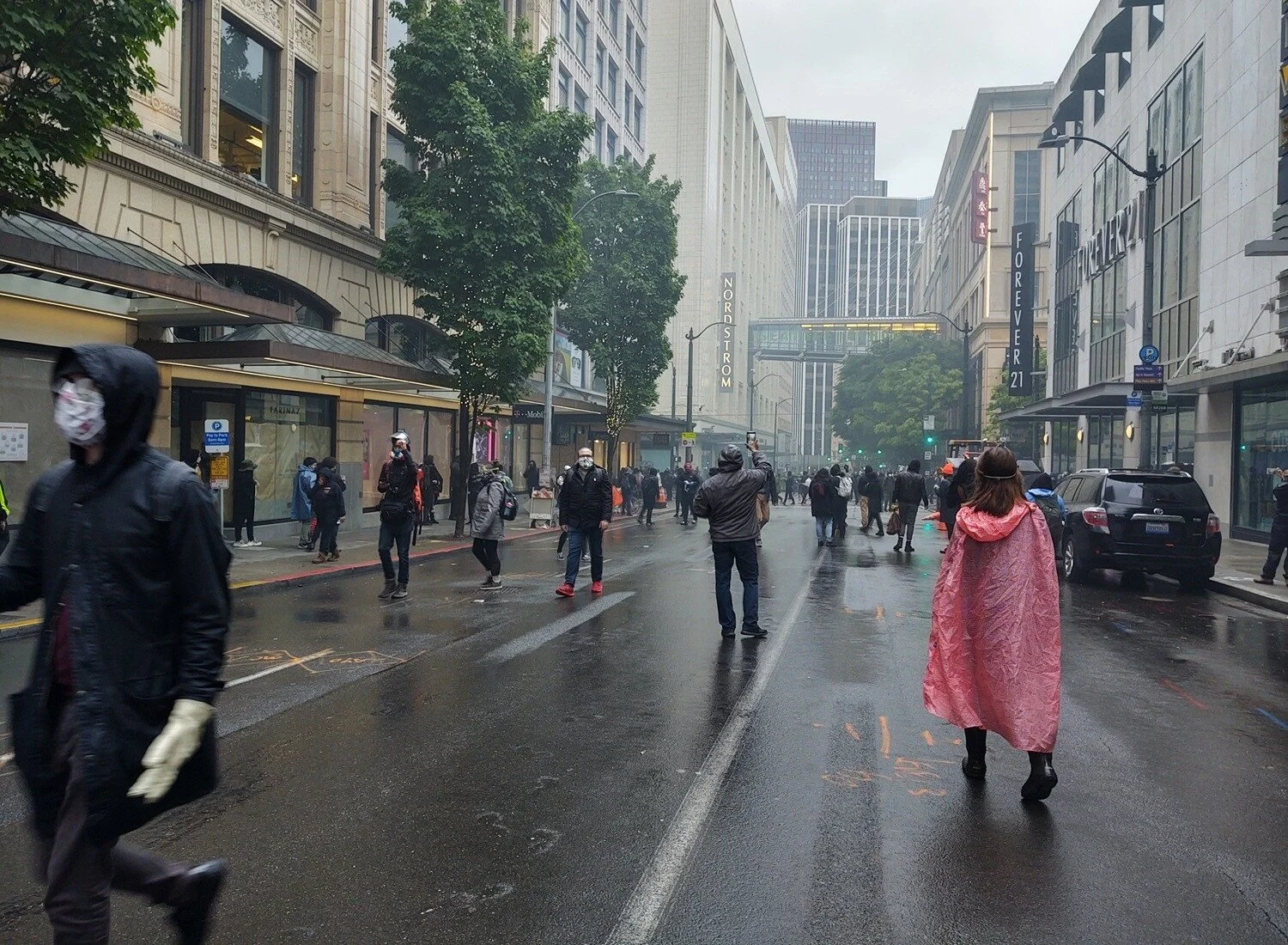
Smoke in the air in downtown Seattle on May 30, 2020.
I found a small group of about a dozen women and queer people and stopped to listen. They were discussing the need to empower women’s and queer leadership in local BLM organizing. They weren't attracting attention to themselves. They were just standing there talking and listening.
I stood with that group for ten to fifteen minutes before the police launched a loud, smoking projectile directly into the midst of the group. Everyone ran. I was so shocked, I couldn't move. The police then fired another smoking projectile that landed near my feet. A stranger dressed in all black came out of nowhere and grabbed me, pulling me out of the cloud of smoke and asking if I was ok.
The person ran off. After I gathered myself, I continued to walk around, taking in the scene that was happening. I had protested a lot in college 20 years before, but I had never seen anything like what I saw that day.
We were notified that the city had instituted a curfew, that we were to leave the area, and that the city had ordered buses and trains to stop running. Since buses and trains weren't running, it was hard for people to follow the evacuation order. It was easy enough for me to walk home, but I didn't want to leave. If you've never had the cops shoot flash bangs or tear gas at you, it's hard to describe how it affects you. I can only say that if you've done nothing to "deserve" such an assault, then it acts as provocation. It's enraging.
Near the name-brand department stores that border Westlake, I saw a rag-tag group of people setting up a barricade against the police using nearby items like trash cans. A few store windows had been broken, although people were largely ignoring the merchandise inside. They were in the stores looking for moveable items to add to the barricade. There were clothes and mannequins strewn on the street. A short Black woman may or may not have been seen running down the street with a naked mannequin slung over her shoulder, which she tossed on top of the barricade.
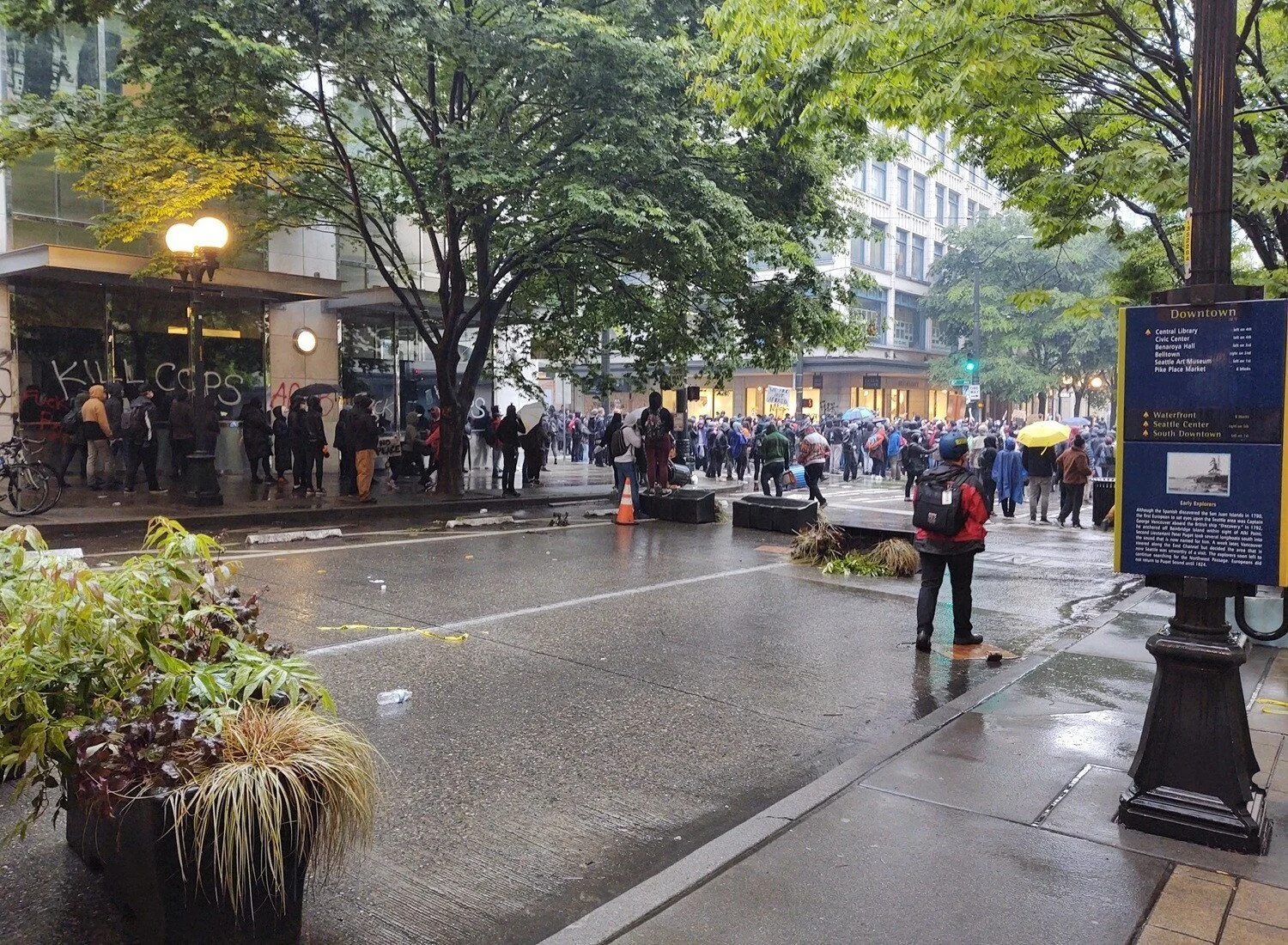
Planters and trash cans overturned in the street in downtown Seattle on May 30th.
Protests move to Capitol Hill
I didn't participate in the protests the next day. I threw away some of my clothing items that had been tear-gassed, and cut off a significant length of my hair, because washing chemicals out of dreadlocks can be a little complicated.
The protests moved from downtown to Capitol Hill, a few minutes drive from Westlake. There's a police station on Pine Street in Capitol Hill called the East Precinct. It's at the intersection of two well-traveled streets. I lived a few blocks from that police station. The cops put up barricades around the precinct and would not let protesters march past, citing an alleged threat report they had gotten from the FBI. (The SPD struggled to provide proof of this threat when asked, repeatedly providing conflicting information. First officials conceded they had received a general threat report, not specific to any Seattle precincts. A month later, the FBI claimed through a spokesperson that the threat was specific to the East Precinct, though they declined to “get into specifics.”)
Within a few days, there were thousands of protesters at the police's barricades around the clock. I participated for many days in the 24-hour standoff with police in Capitol Hill. There was a frontline, a mass of bodies, and there was protest support set up nearby at Cal Anderson Park. You could leave the frontline to get food, coffee, rest, basic medical attention, and maybe even some weed, which is legal in Washington state. Then you could go back to the standoff.
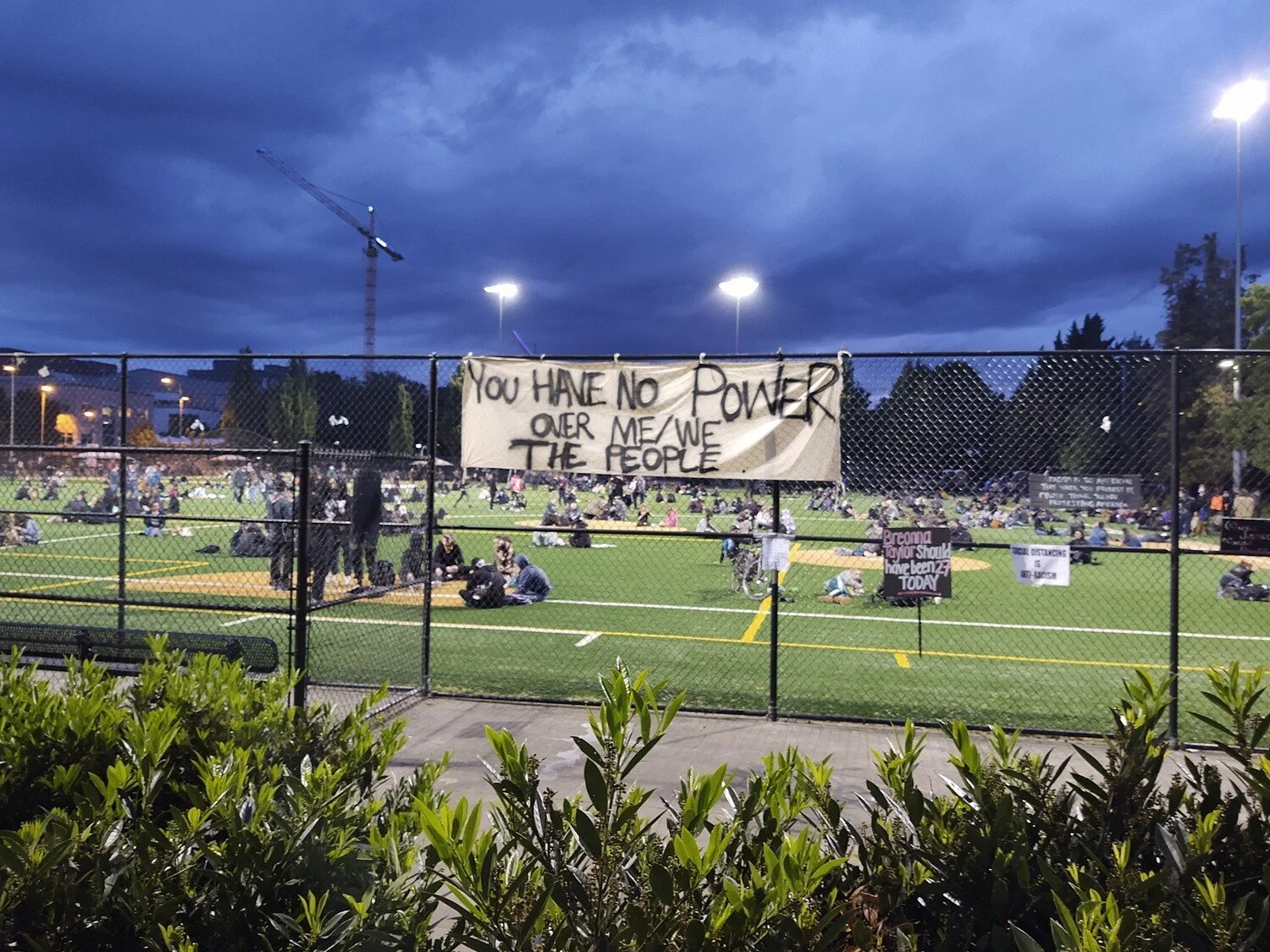
Cal Anderson Park during standoff with the Seattle Police Department, June 05, 2020.
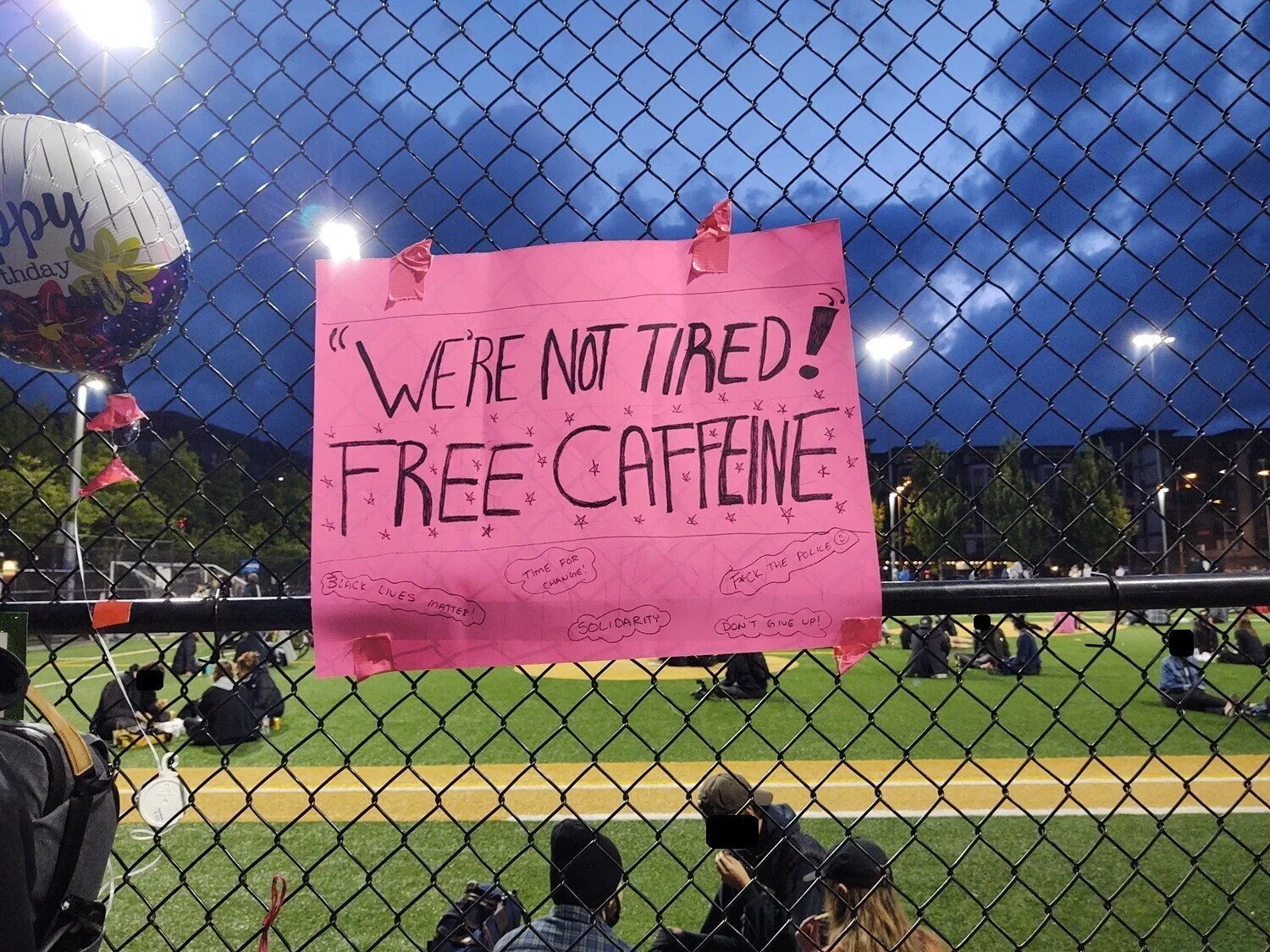
Protesters collected coffee donations to stay awake during the standoff.
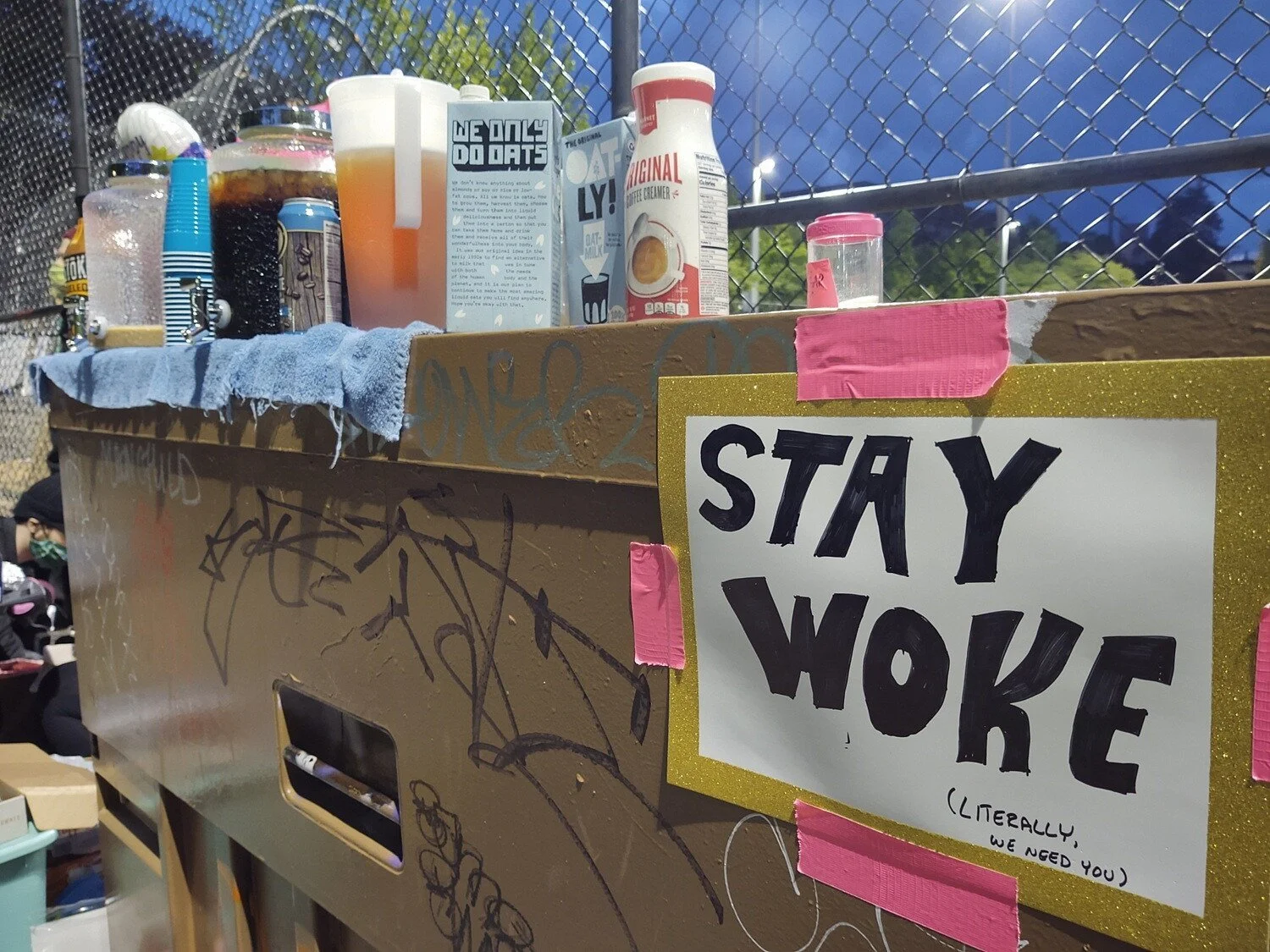
More coffee. Very Seattle.
Most Seattle residents were in support of the protest. The majority of the protest supplies were purchased with money donated by the community. Lots of people who were not actively protesting came to the park and hung out, which helped with morale in a way. When I got overwhelmed or tired at the standoff, it was good to step into a space that was far less intense and rest. For others, especially those outside Seattle, it looked like Coachella in the park, and people were critical of that vibe being so close to police brutality happening nearby.
The police used tear gas, mace, flash grenades, rubber bullets, and other suppression tactics on us. There was so much unnecessary macing that people brought umbrellas to the front lines to deflect it. After a cop grabbed someone's pink umbrella, the pink umbrella became the symbol of the Seattle protests.
The more they cracked down, the more people showed up. The more people showed up, the more they escalated. It was brutal. On June 7th, a man drove his vehicle into the protest. When people from the crowd tried to stop him, the driver shot a protester in the arm. Then the driver exited his vehicle and walked through the police line without issue. He was a cop's brother, but he alleged that he did not know what was going on with the protests, and was merely on his way to work.
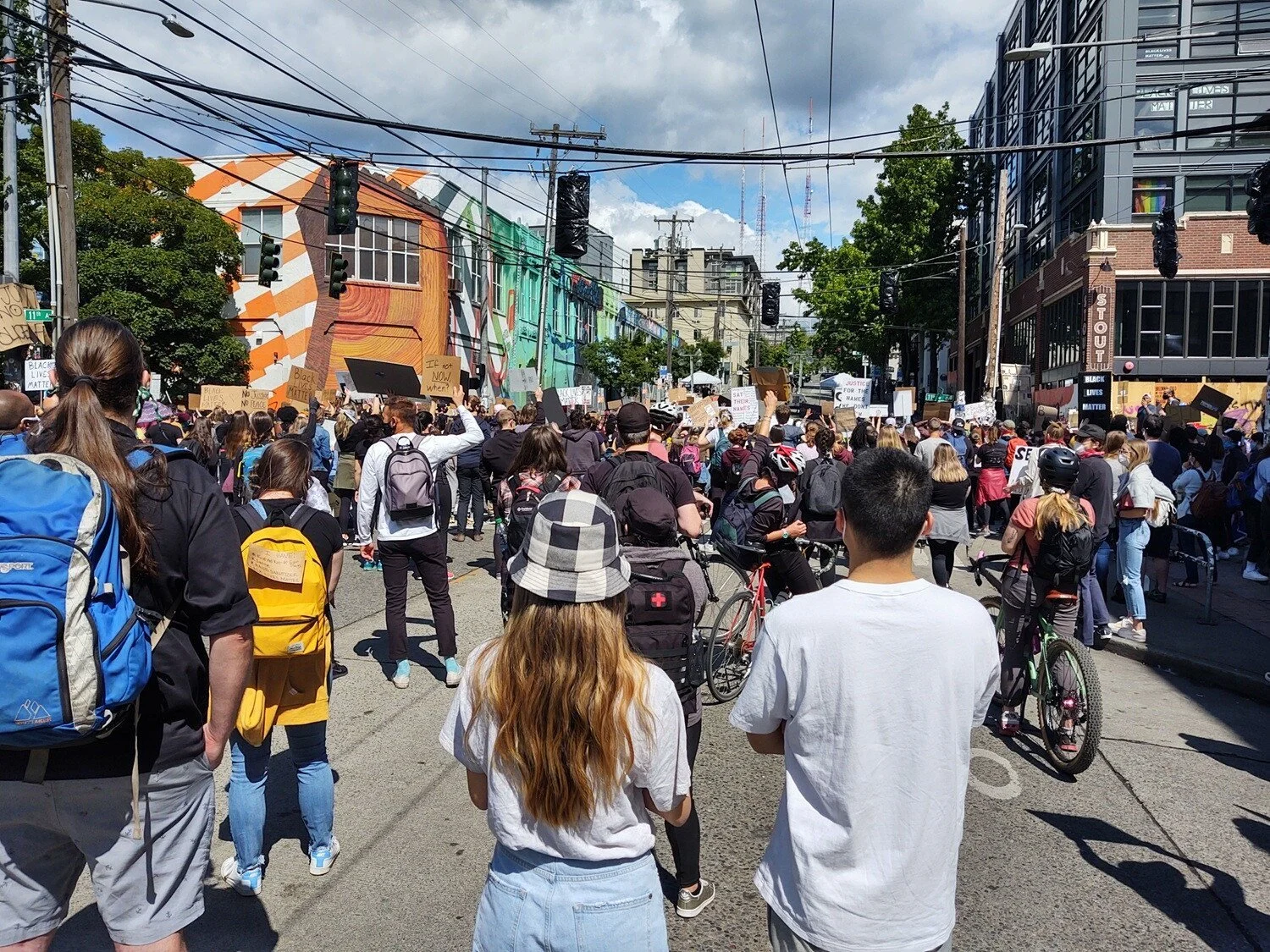
Protesters at standoff on June 7, 2020.
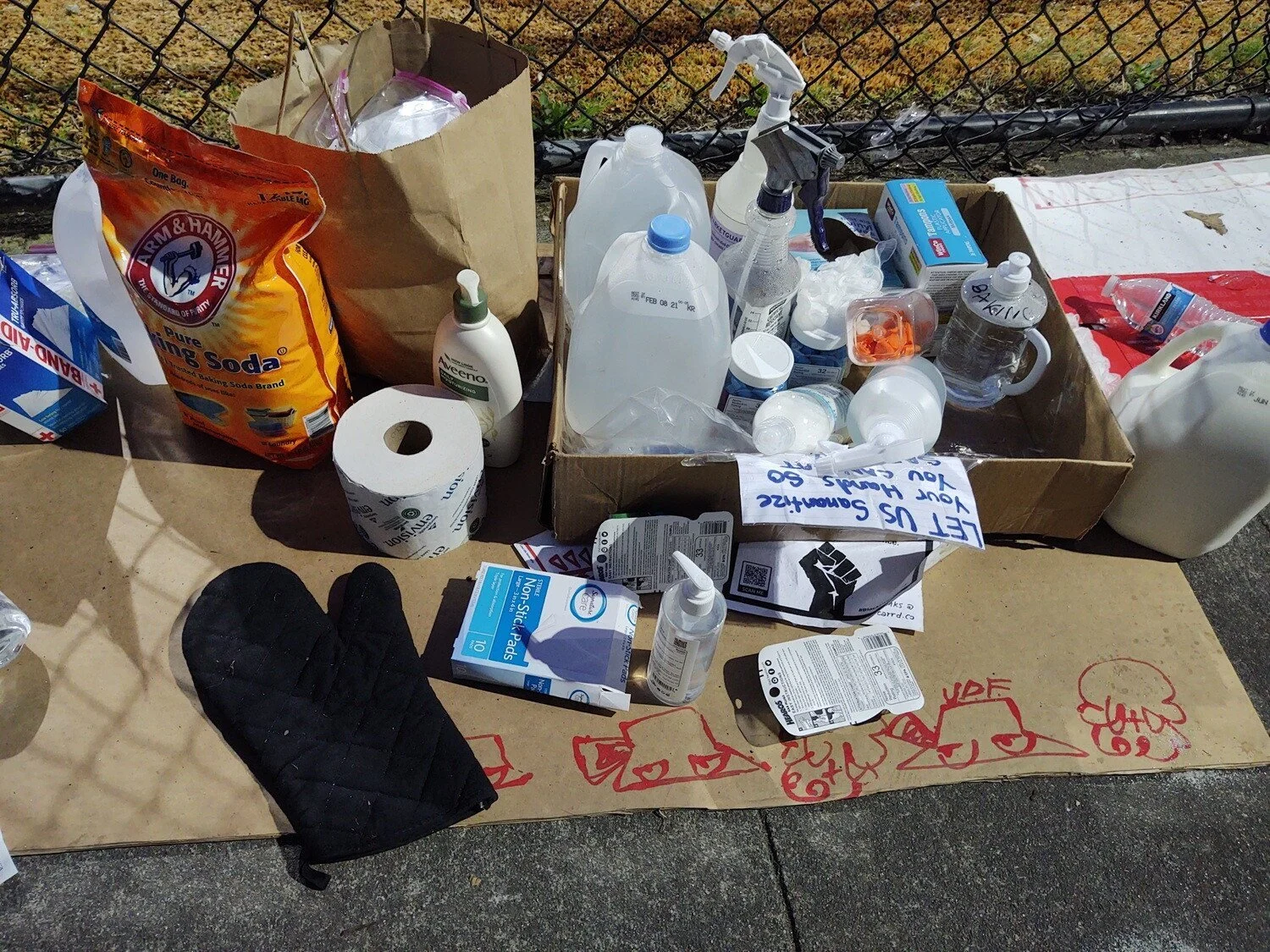
Protest first aid supplies
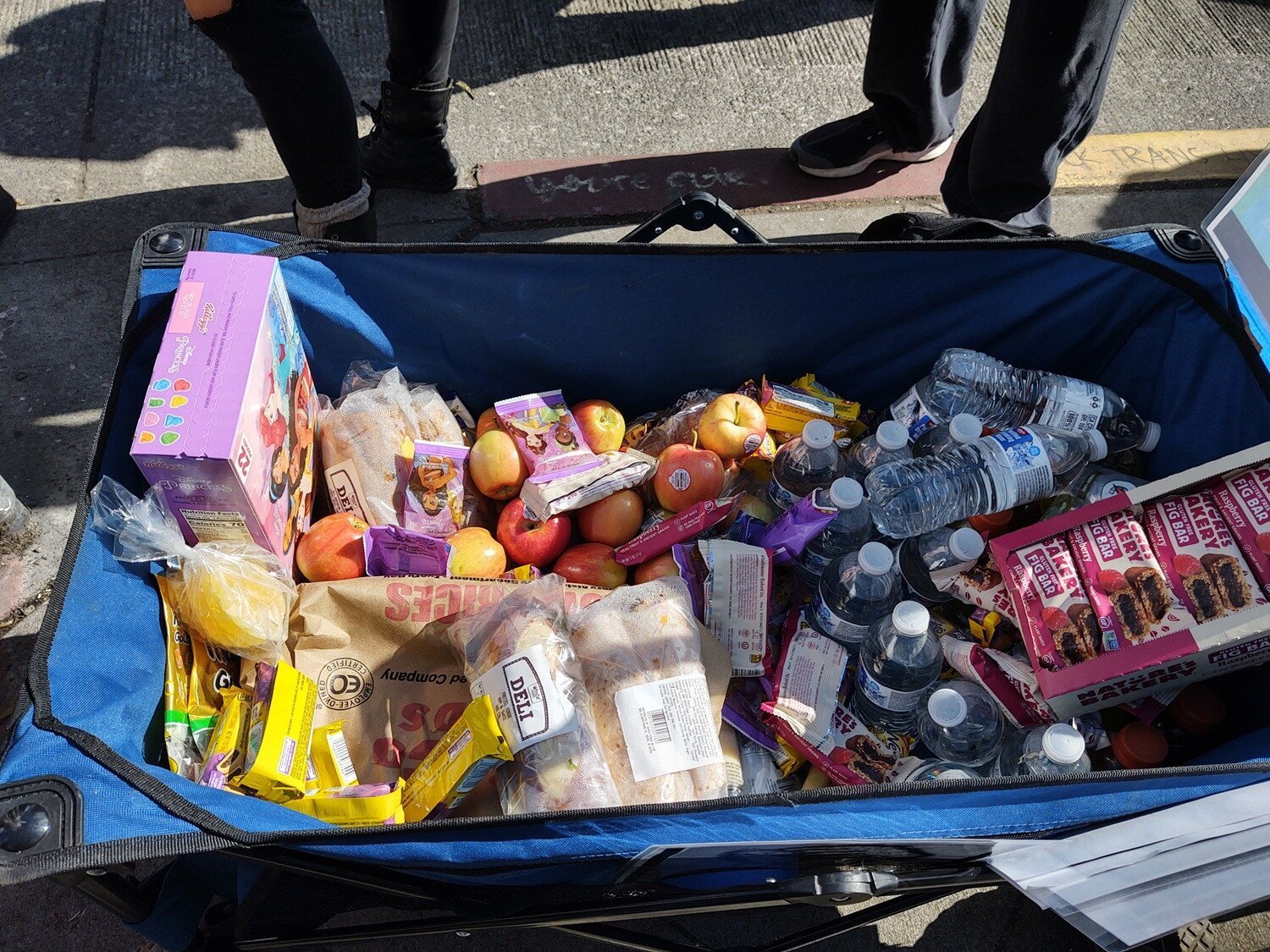
Food and water donated to BLM protesters
The next day, on June 8th, the police abandoned the precinct.
Years later, the SPD would be ordered to pay a $10 million settlement to protesters in a class action lawsuit over their brutality during the stand-off in 2020. They didn't admit fault, and certainly the cops have never been held accountable for the broad scope of what they did. We were infiltrated by plainclothes cops from multiple cities, and uniformed cops from other jurisdictions were supporting the SPD as well.
Recently-released documents, obtained through public records request and legal action, indicate that by the third day of the protest, the FBI's Terrorism Task Force had already infiltrated us. They were also shipping weapons to Seattle police from out of state during the stand-off.
We had not committed any terroristic acts by standing at a barricade demanding that the police allow us to march down the street. But America has an ever-expanding domestic terrorism industry that must be fed bodies in order to justify its funding. They were determined to feed us to this monster from day one, and they were determined to create the narrative that would justify it. As we took breaks in the park and laughed at the signs vendors had put up, like a hand-written "stay woke" sign advertising free iced coffees, we truly had no idea the level of hell we were about to go through.
Last updated: July 20, 2026