Part 2: The Capitol Hill Autonomous Zone
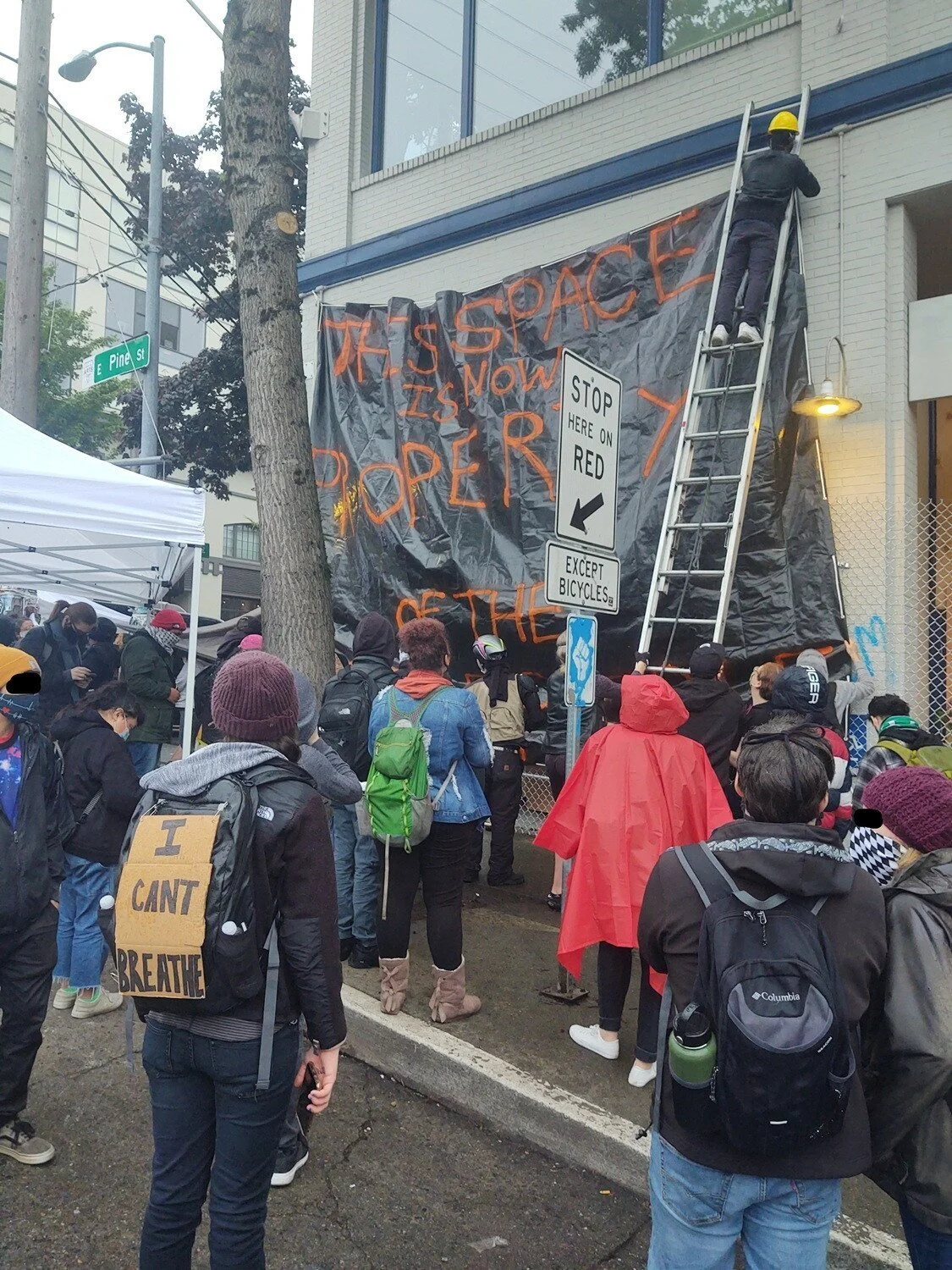
Dozens of people stand outside the East Precinct on June 9, 2020. A black banner covering the building’s facade reads, “This space is now property of the Seattle people.” Photos: Tarika Powell
This is Part 2 of COINTELPRO in the Digital Age. In this essay:
Formation of encampment at the East Precinct;
Formation of state and media narratives about encampment
Note: These essays reflect the author's present recollection of events. Some names and characteristics have been changed.
Previously in this series: Part 1: The Protest
On June 08, 2020, the police hastily abandoned the East Precinct after days of violence against protesters, leaving some entrances unlocked. I was at home watching protest coverage when this happened. I went down to the precinct, where a large crowd was gathered in a celebratory mood. I'm short, so I stood on top of one of the barricades to see. People were taking turns speaking. They spoke on their feelings about what had just happened, the future they wanted to see, and the importance of holding the police accountable. When I spoke, I said that the government would offer us committees that made recommendations for change, and we should not allow them to pacify us with committees and recommendations. We should demand actual change.
Someone noted that at least one of the doors of the precinct was left open, speculating that SPD was trying to entrap us into going into the station to either vandalize it or set it on fire, like the precinct in Minneapolis. Protesters locked the doors. Not only did we not want to be set up; Capitol Hill is a densely populated area with many high rise apartment buildings. People had been getting tear gassed inside their apartments right alongside the protesters. If there were to have been a fire in that precinct, it would have affected the whole community, with the fire potentially spreading to nearby residences and businesses.
A few people volunteered to camp outside the building so no one could go inside. Several others offered the volunteers sleeping bags and tents, and went home to get them. That was how the encampment was born. This act of mutual aid and community care was the seed from which everything else grew.
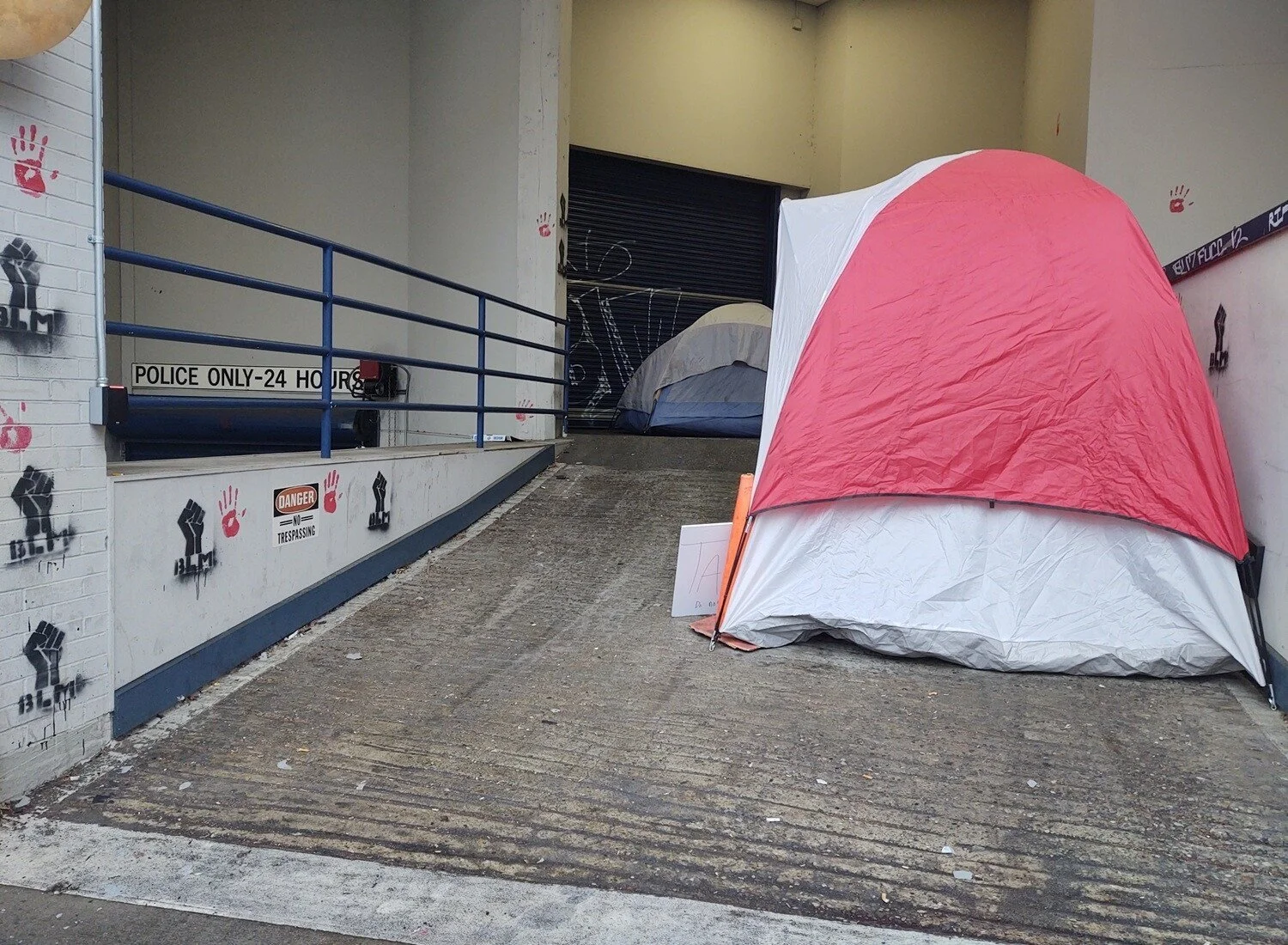
Tents on the 12th Ave side of the East Precinct on June 9, 2020
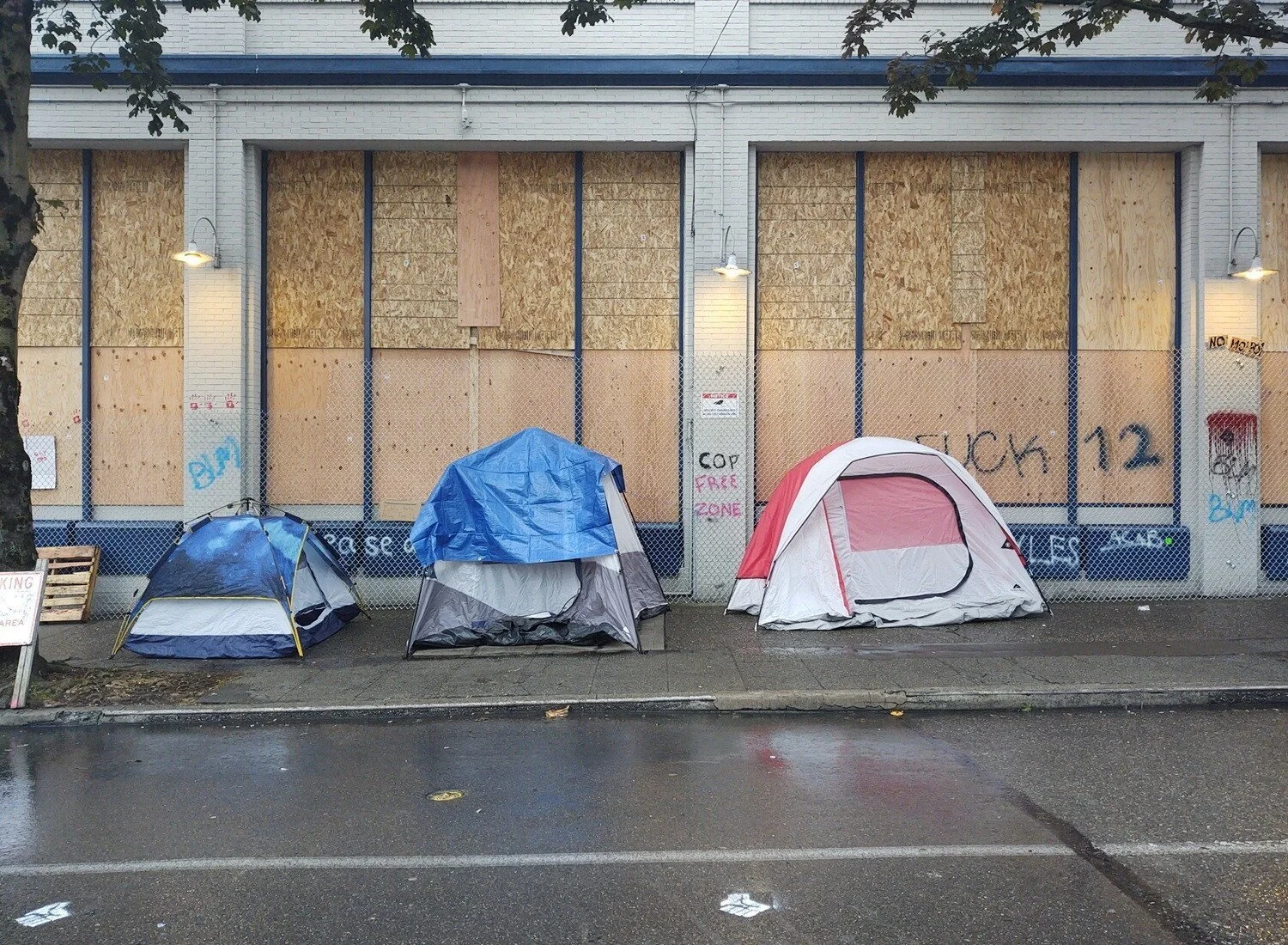
Tents on the Pine Street side of the East Precinct on June 9
In the following days, we continued our protest at the site where we had been brutalized, and we would not allow a police presence back into the area. Call it cathartic. Call it a trauma response. Perhaps we were stuck in "fight" mode. I'm sure that we were driven by some sort of psychological response to what we had just experienced, that compelled us to keep fighting them over the space where they had artificially created a fight with us.
It's important for people to understand that had the police never abandoned that building and left it unlocked, there wouldn't have been an encampment at the East Precinct. There was no plan to create an encampment or occupation. There was no leadership. It was simply a restorative and community-centered gathering at a space where the police had terrorized us. It was a refusal to hand them back the power they had just grossly abused. And while the encampment has been labeled a white leftist protest, the fact is, there were plenty of Black people there on the night of June 8. It was Black people who suggested guarding the building, and it was white allies who brought the supplies to get through the night, and the next night, and the next night.
I would describe the atmosphere after the police left as a protest combined with a summer festival combined with a large swap meet where everything was free. We gave out food, clothing, masks, and other goods, many of which were in short supply because we were in the early days of the coronavirus pandemic. Indeed, the protest had the first COVID testing station to be located within a reasonable proximity to many of us.
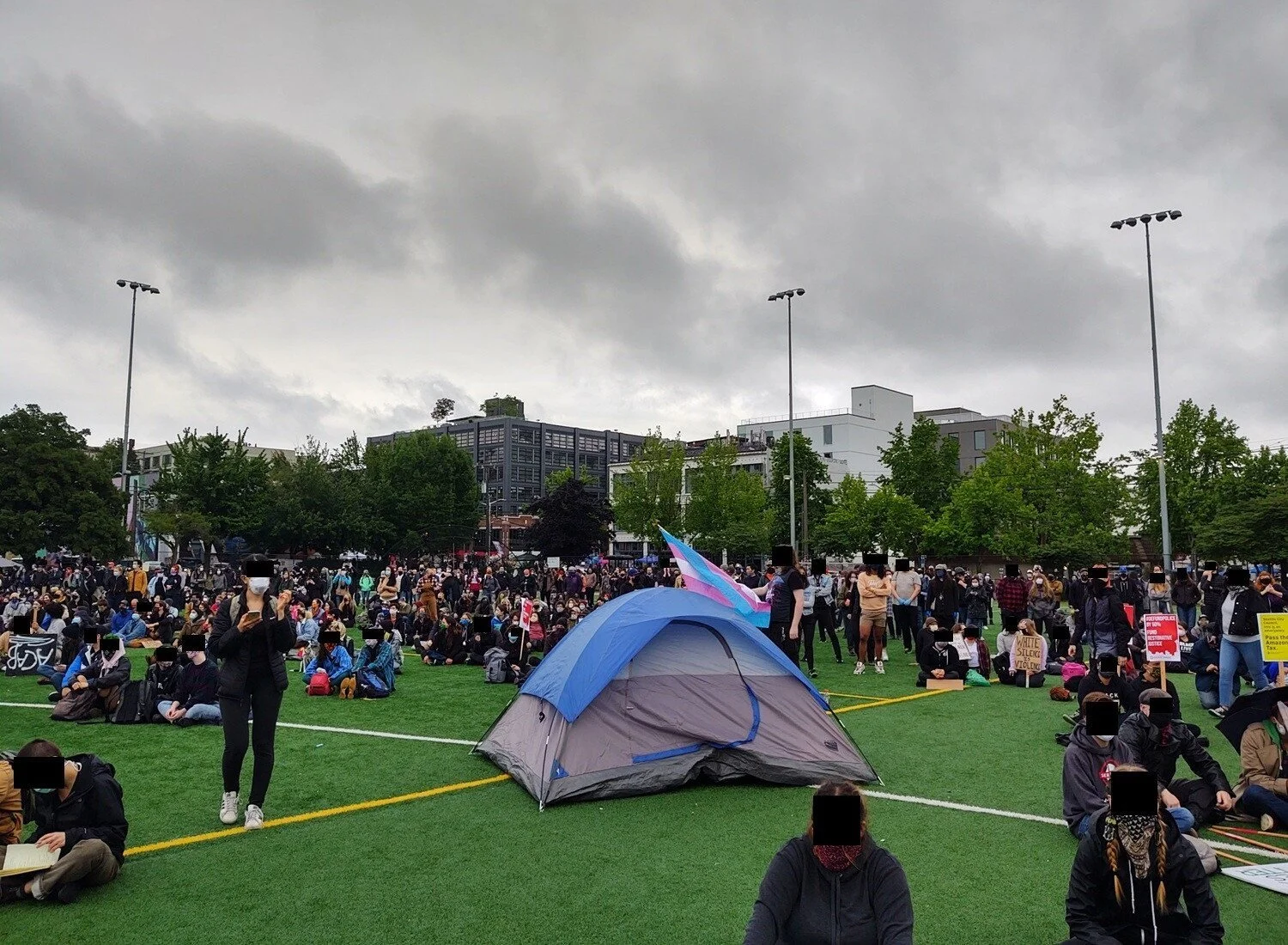
Thousands of protesters gather at Cal Anderson Park on June 09
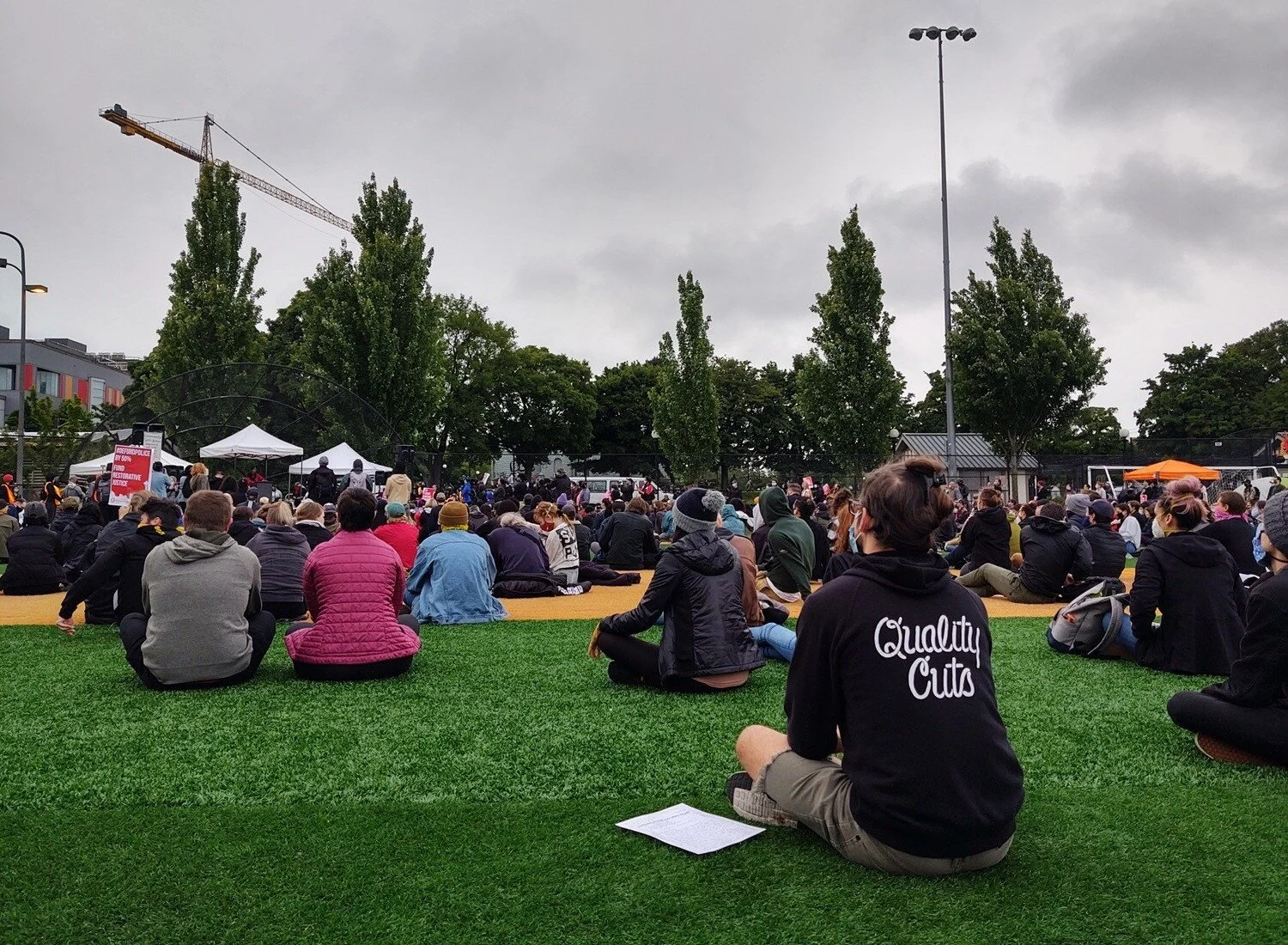
Protesters listen to a speaker in Cal Anderson Park on June 9
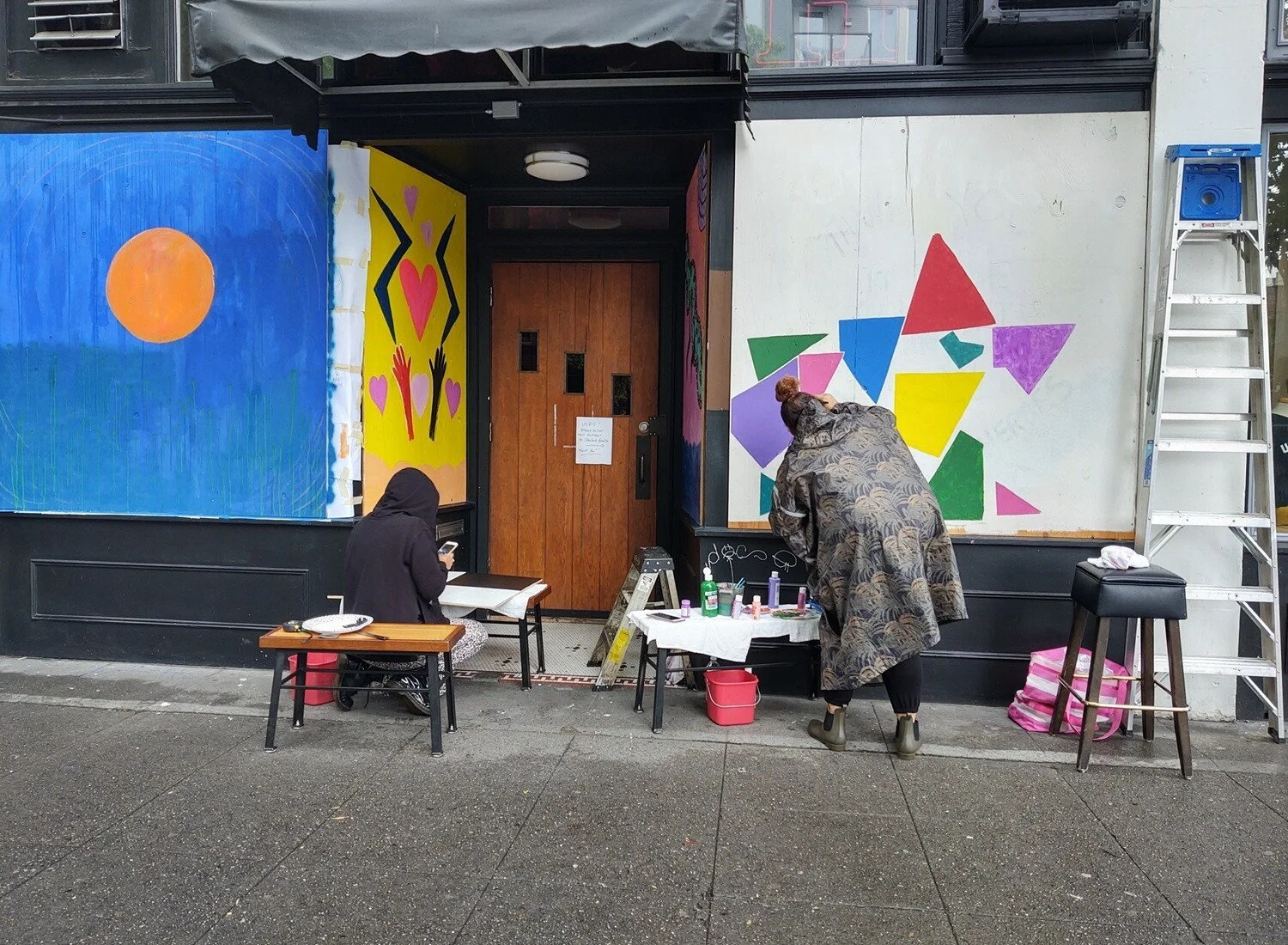
Two artists paint boarded-up windows in CHAZ on June 11
Anyone who had something to offer the space was encouraged and free to do that thing or donate that thing. Someone started a "conversation cafe," where people from all walks of life came and talked to each other. A group set up a pop-up library. Someone else started a garden and eventually was able to feed people from said garden. There was live music. There were multiple organizations preparing hot food. There was yoga. While these things brought joy to those of us who'd stood at that barricade for a week, getting tear gassed and otherwise attacked, there was a common refrain from those who hadn't been at the barricades that it looked like we were having a party instead of a protest. It's hard to explain, but I would quote the common refrain from African-American gospel songs that "joy comes in the morning." When the police left, joy came back into the community.
People came to the encampment with their children and pets. I saw my boss's 80-something year old mother there. Politicians came through to give speeches. Quite a few homeless/unhoused people moved into the space to avoid sweeps by the police. They received tents, sleeping bags, food, water, and whatever else we had available.
We called ourselves the Capitol Hill Autonomous Zone, or CHAZ, merely because someone had written that on a street sign the night the police left. Without intent, a plan, or a leader, our so-called "Coachella protest" held the police and the city off for a month. In that month, we tried to use the occupation as leverage to get several demands met, including freeing any protesters who'd been arrested, and defunding the police by at least 50%.
CHAZ and the Media
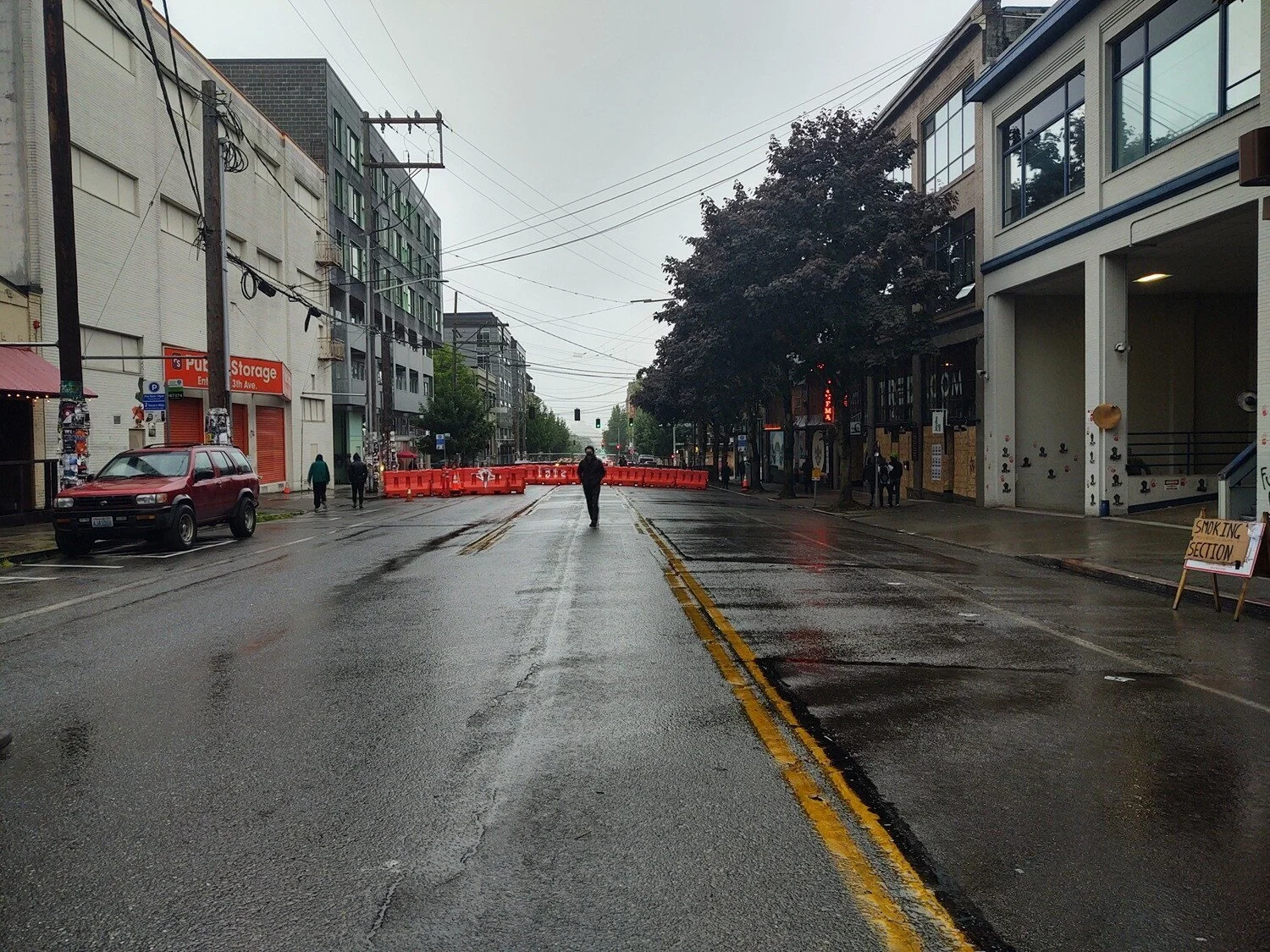
A quiet 12th Ave in the newly-formed Capitol Hill Autonomous Zone on June 09. (Precinct in right foreground.)
CHAZ became an international news story, and a favorite source of mockery for right wing media. They particularly disliked the garden, for some reason. Right wing news, including major outlets, alleged that we had seceded from the United States because we said we were "autonomous." Every bottom feeder with a right-wing YouTube channel came through to film agitation-reaction content. They'd walk through the protest with large American flags and make comments suggesting that they were the sole patriots present, which would anger people, and then they would film those angry reactions to pretend they were under attack from people they were intentionally provoking. Protest grifters of all political stripes flooded into the space, seeing an opportunity in the media coverage we were getting. Encampments with similar names sprang up in other cities, including the Black House Autonomous Zone (BHAZ), which was temporarily set up outside the White House in DC, and the Patrick Kimmons Autonomous Zone (PKAZ) in Portland.
President Trump caught wind of the encampment through right wing media, and threatened to use the force of the federal government, including the military, to attack it. We were one of his many short-lived fixations during his first administration. His rhetoric only increased negative coverage and attracted the attention of white supremacist groups, who made threats against us. Some of the threats we heard about were actually fabricated by the police, but we did not know this at the time. Due to these threats and alleged threats, left-leaning gun advocates came to the protest to protect us. The media then took photos of them, reporting that we were armed in addition to having seceded from the United States and started a garden.
Then, at the height of its popularity as a news story, the protest was renamed the Capitol Hill Organized Protest, or CHOP. Some sources say the acronym stands for Capitol Hill Occupied Protest. There was no vote or consensus to rename it. I was walking through the encampment one evening around dusk when I observed two men telling a journalist that the name was changed. I was tracking media about the protest at the time, and documenting what various outlets were reporting. A Russian outlet was the first to publish a story announcing the name change. Small right wing outlets followed suit, then larger right wing outlets. Then mainstream outlets took pains to convey that they didn't know what the protest was called, and perhaps we didn't either.
Once the name CHOP was taken on by the media, that became the name everyone called the encampment, including us. But I never joined a protest called CHOP. The name change actually demarcates a shift in the timeline, of when protesters had substantial control of the protest and our narrative vs when the state had taken on a controlling interest in both. CHAZ was an inspiring protest to a lot of people who actually knew what was going on there, even if it was flawed. To others, it was a silly hippy protest, but it was more comedic than harmful. CHOP, on the other hand, was a violent "warzone" where two young Black males were murdered, and two others shot -- CHOP became fodder for anti-leftist propaganda and racial division for years to come.
If you are reading this essay and you have only heard negative things about CHAZ or CHOP, I would ask you to put your negative perceptions aside to hear my story without bias. I cannot tell the whole story of the encampment. I can only tell you what I experienced, and what I experienced does not match what people now believe to be true.
It does not matter to me whether you think our protest was good, smart, or well organized. What matters is that I don't deserve what the state has done to me since June of 2020, and neither does anyone else.