Part 7: Unbought, Unbossed, Unwelcome
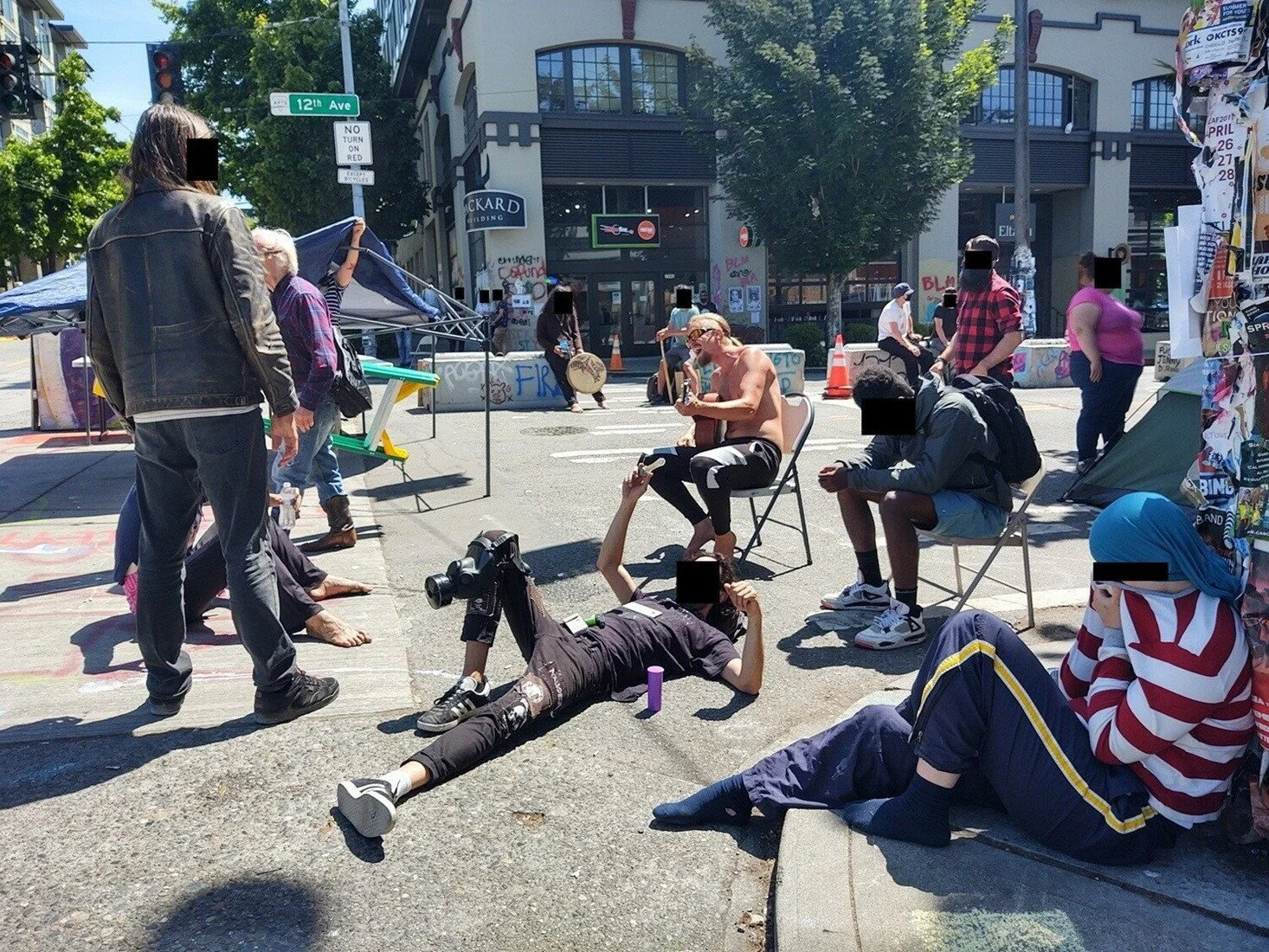
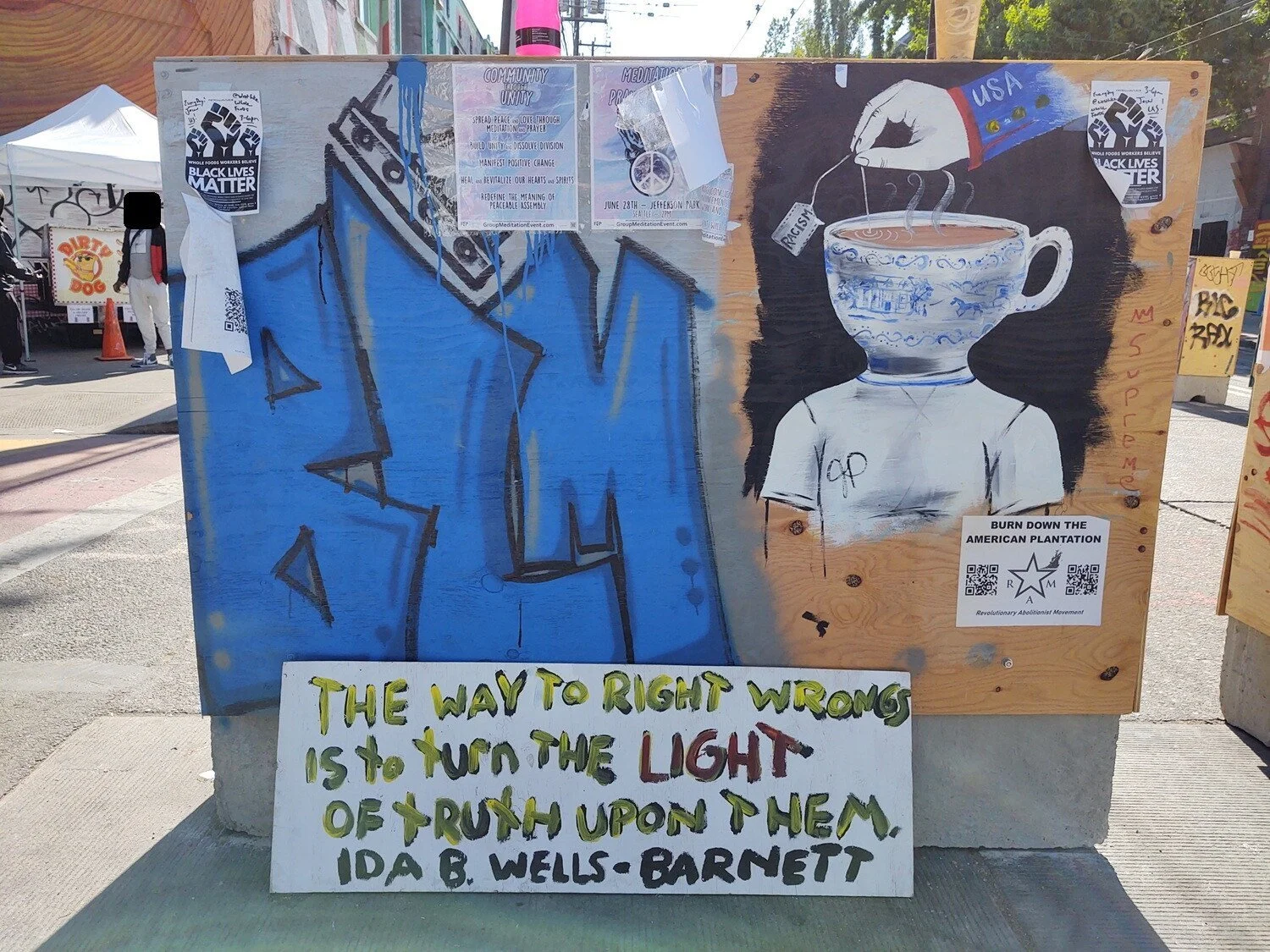
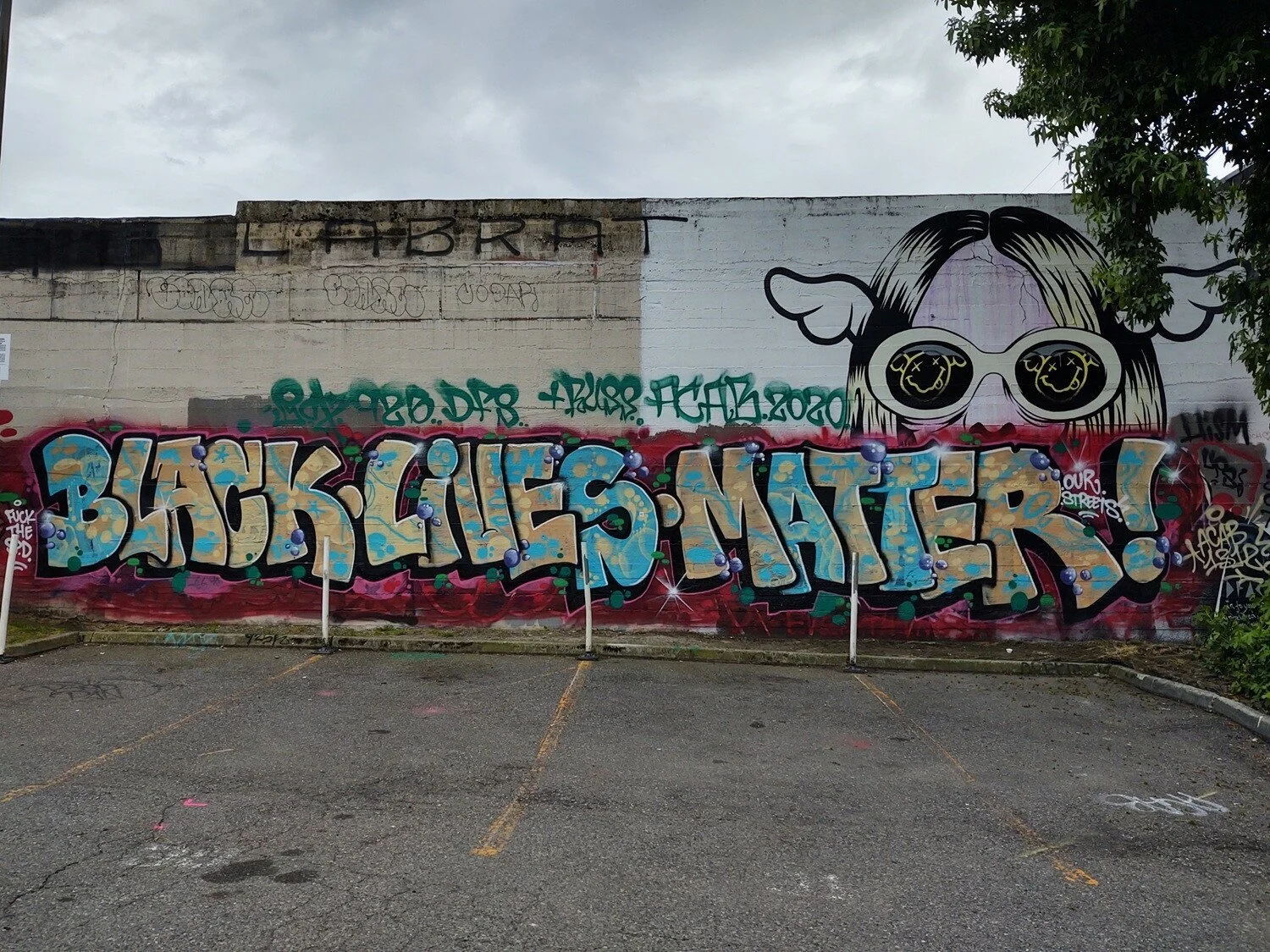
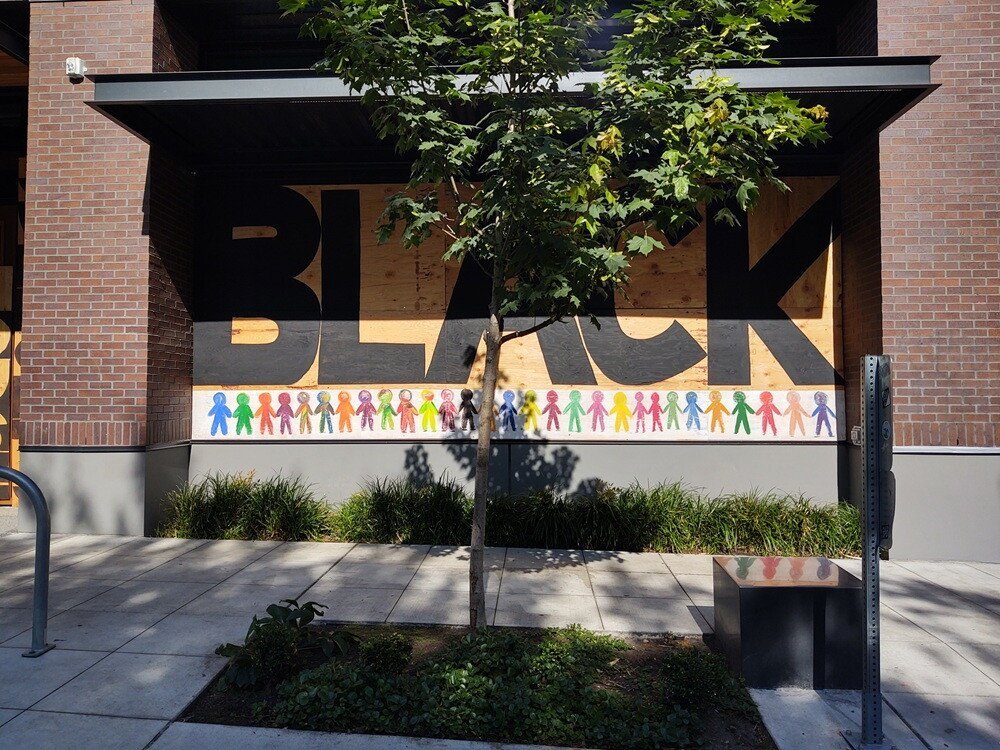
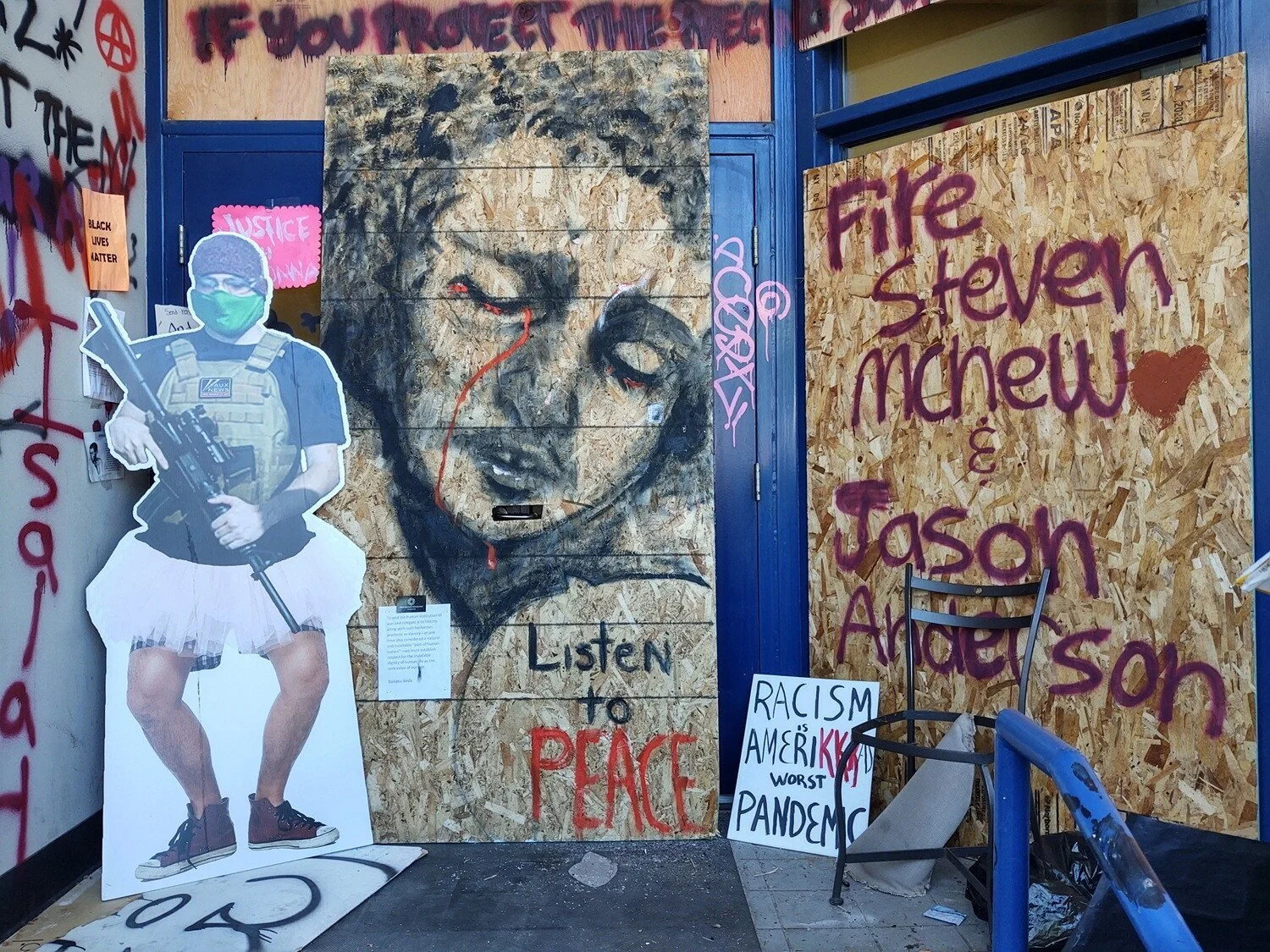
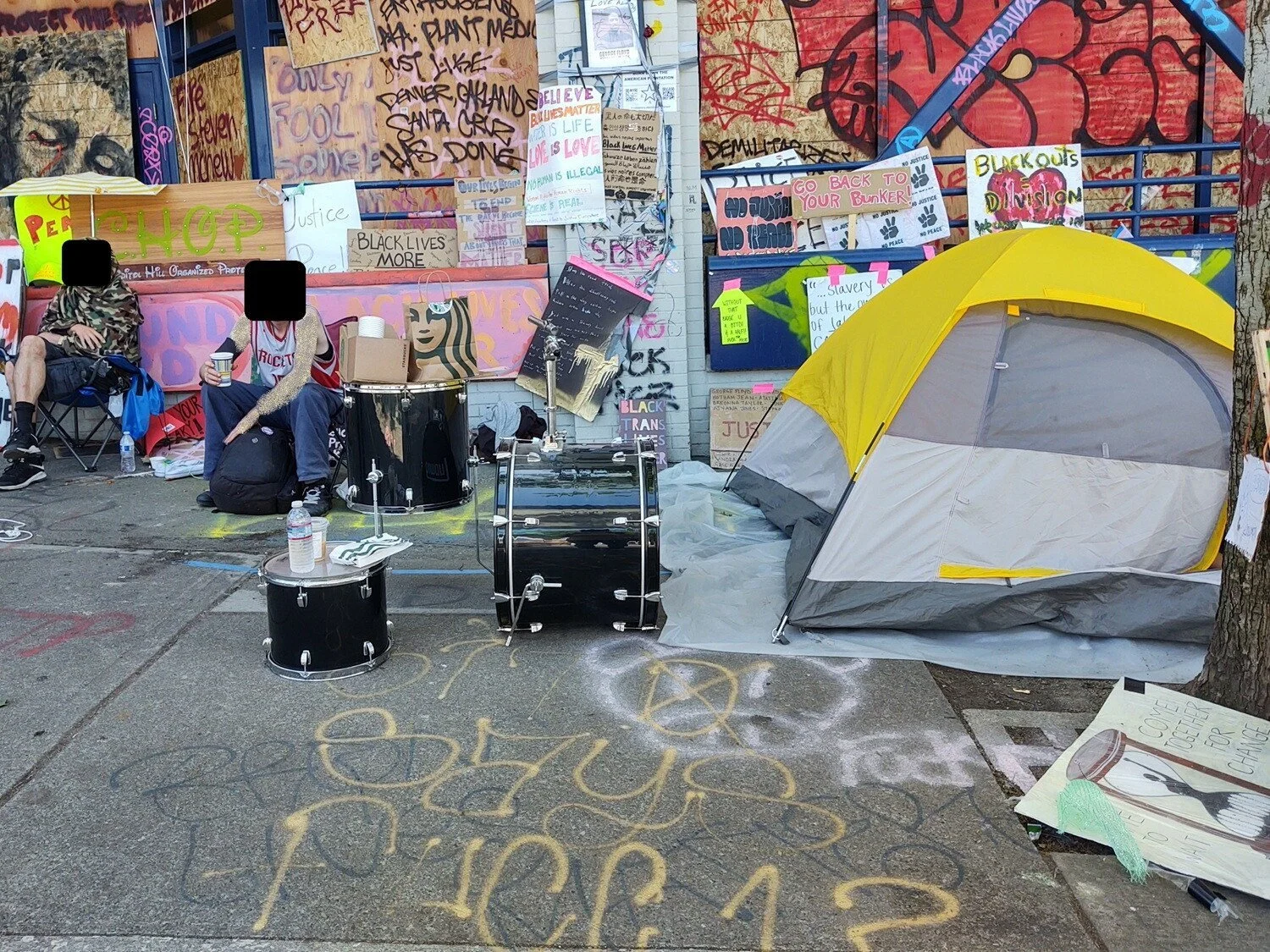
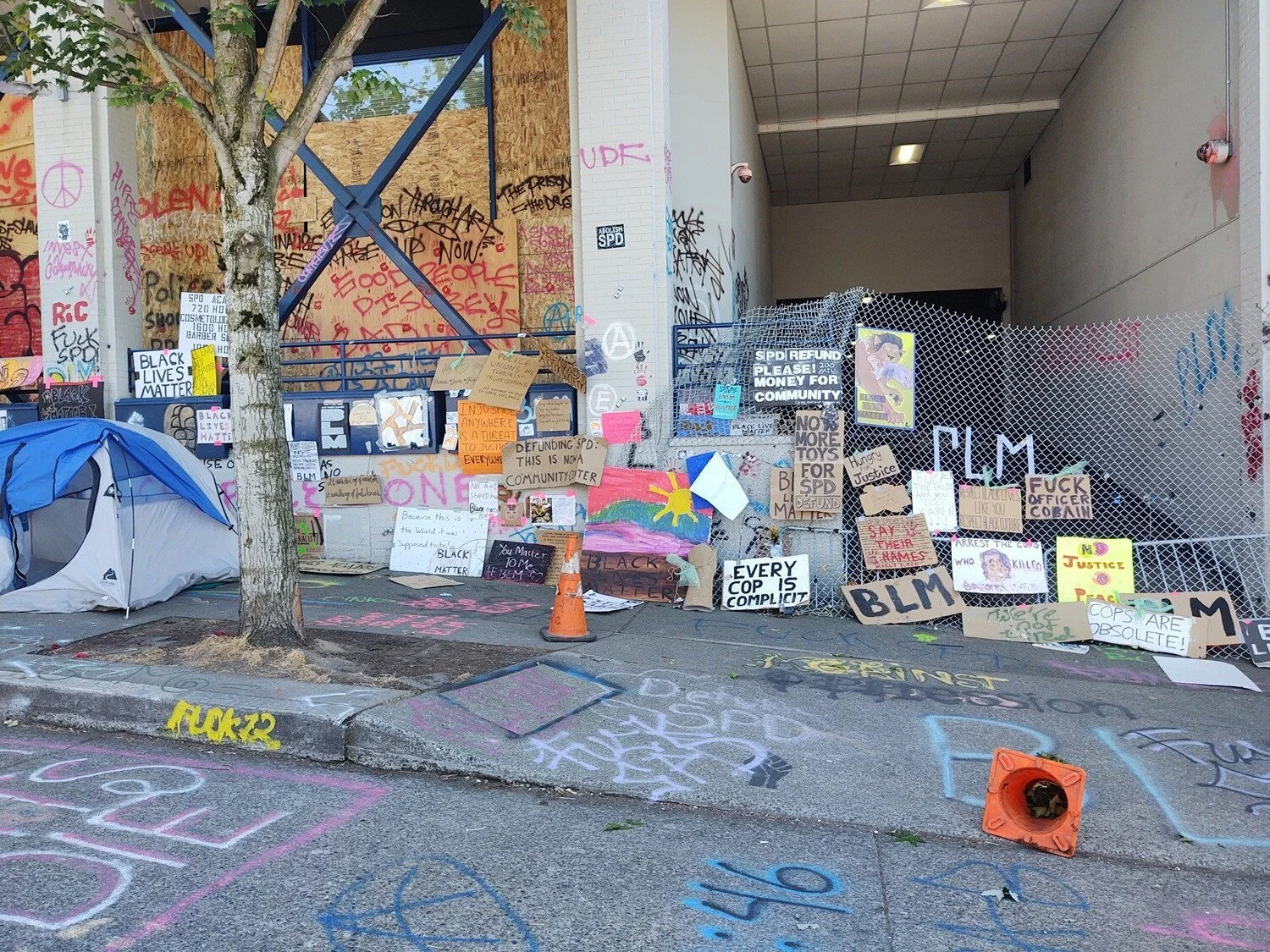
People hang out at 12th & Pine in CHOP during the last week of June. Photo: Tarika Powell
This is Part 7 in the series COINTELPRO in the Digital Age
Contents: I write a statement on behalf of protesters. I’m barred from entering the press conference where the speech I wrote is given. My vehicle is damaged.
Note: These essays reflect the author's present recollection of events. Some names and characteristics have been changed.
Previously in this series: Part 6: Capture
The next morning, I got dressed for the meeting, only to get a call or text to come to Leah's house, which was nowhere near the Democrat's office. For security reasons, it was common practice not to discuss sensitive information over the phone, so I didn't request more details. I got in my car and drove over.
When I got to Leah's house, she was there with the others who had attended the meeting the night before, as well as a popular social media activist who I'll call "Pamela." Apparently Pamela had called off the meeting. The group was now convinced that we would all be arrested if we went to the Democrat’s office.
This wasn't my first encounter with Pamela, but it was the first time we spoke with each other. The rumors said she had been “running shit” at Occupy when she was only 13. The rumors said she’d broken one of the windows of a major department store downtown at the end of May. I didn’t actually believe these rumors, but I didn’t know whether Pamela herself was the source of this embellished activist resume. I hadn’t yet decided what to make of her.
Kandy asked me what I thought they should do. Mind you, it was time for the meeting to start, and it would take us more than 20 minutes to get inside the office we were supposed to be sitting in at that very moment. I said I was just there to support them, so I'd support the group consensus. They canceled with Mr. Charles.
I wasn't happy with this outcome, but I accepted the consensus. We would be extremely late to the meeting at that point, which would have thrown us off guard, made us look unprofessional, and lowered our ability to negotiate for demands. Plus, I would not want to go into such a meeting with people who constantly changed their minds based on who they were talking to. I sensed that if another person joined us and said something different, Kandy and company would then take on that opinion. Accompanying this group into a room with a politician would probably be embarrassing and frustrating for me.
There were several meetings at Leah's house that week— the week following the shootings on Juneteenth. I drove around quite a bit. On June 24, I went to my car to discover damage to my rear view mirror. The front and back halves of the mirror were partially separated, and there were some contact abrasions. It crossed my mind that someone may have planted a tracking device there, but I figured there were more discreet ways to track me. I also didn’t believe, yet, that I was being surveilled at the level that I was. I would go on to experience a number of odd or frightening things happening to my vehicle, but on that day I went with the simplest answer. Perhaps a biker had clipped it. I fixed it and kept moving.
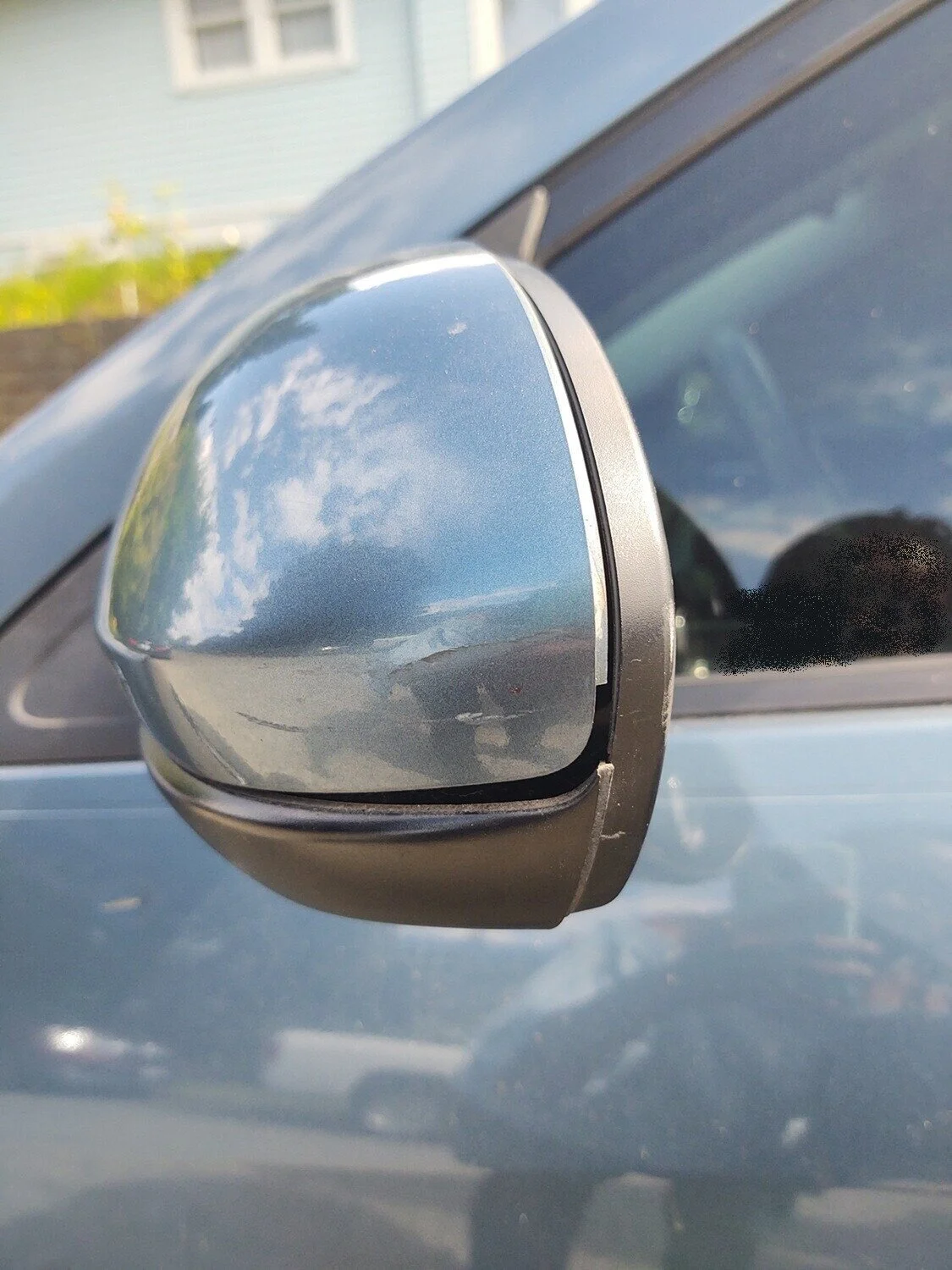
Damaged rear-view mirror (June 24, 2020).
At one of the meetings at Leah’s house, I was told that a local journalist wanted to hold a press conference with our collective and other groups that had formed in the protest. Kandy had already sent me a message saying, “We need a speech,” but I hadn't written it yet because I didn't know who “We” was or what the speech was for. I used Leah's laptop to write a speech that would represent our collective at this joint press conference.
While I was writing, Kim arrived. She was not a member of the collective, but she would frequently show up and engage with us as though we had given her the same access to ourselves as we had given Kandy. I did not appreciate that. She was not someone I wanted to be in community with. They said Kim was in Seattle to help Kandy get the nonprofit off the ground, and she would be going back to her city of residence soon. That was my expectation, and the expectation of others in the collective.
We'd all been asked to surrender our phones that day when we got to Leah's house. The phones were quarantined in the laundry room inside the house. We met outside, in the backyard. But Kim was on a video call when she arrived, and was not asked to surrender her phone. She was talking, loudly, to the person on the other end about the Seattle protests. Her words suggested she was an active participant in the protests, which was not something I had observed to be true. At one point, she swung her phone around to show that she was at a meeting. Meaning, she showed all of us to whomever was on the other end of the line. It didn’t fully register in the moment; I was simply annoyed with her presence and behavior while we were attempting to get work done.
She was not, in fact, a part of our meeting. She sat at a separate table across the backyard, talking on her phone until the meeting was over, the speech was written, and people were starting to leave. Once I was done typing, we started discussing who would give the speech. Kim joined the conversation. She and Kandy laid into a hard sell to advocate for Kandy. I had zero interest in giving the speech, and neither did anyone else present. We were all active in the encampment, and had a real concern about becoming targets of violence. I didn't need a hard sell, because I didn't need the attention.
It was decided that Kandy would deliver the speech to protect the identities of active protesters. If they wanted an opportunity to amplify their nonprofit, what did I care? I thought the arrangement would work out for everyone. I left and went home.
Kandy worked on memorizing the speech. We coached and encouraged her well into the evening. I reached out to some of my contacts to try to maximize the amount of press at the press conference.
Kandy kept texting with changes to what the next day would look like. It went from a group press conference to just our collective. Then the journalist allegedly wanted to do a solo interview with her after the conference. Based on what I was being told, it seemed that the journalist was asking for a lot, and I said so.
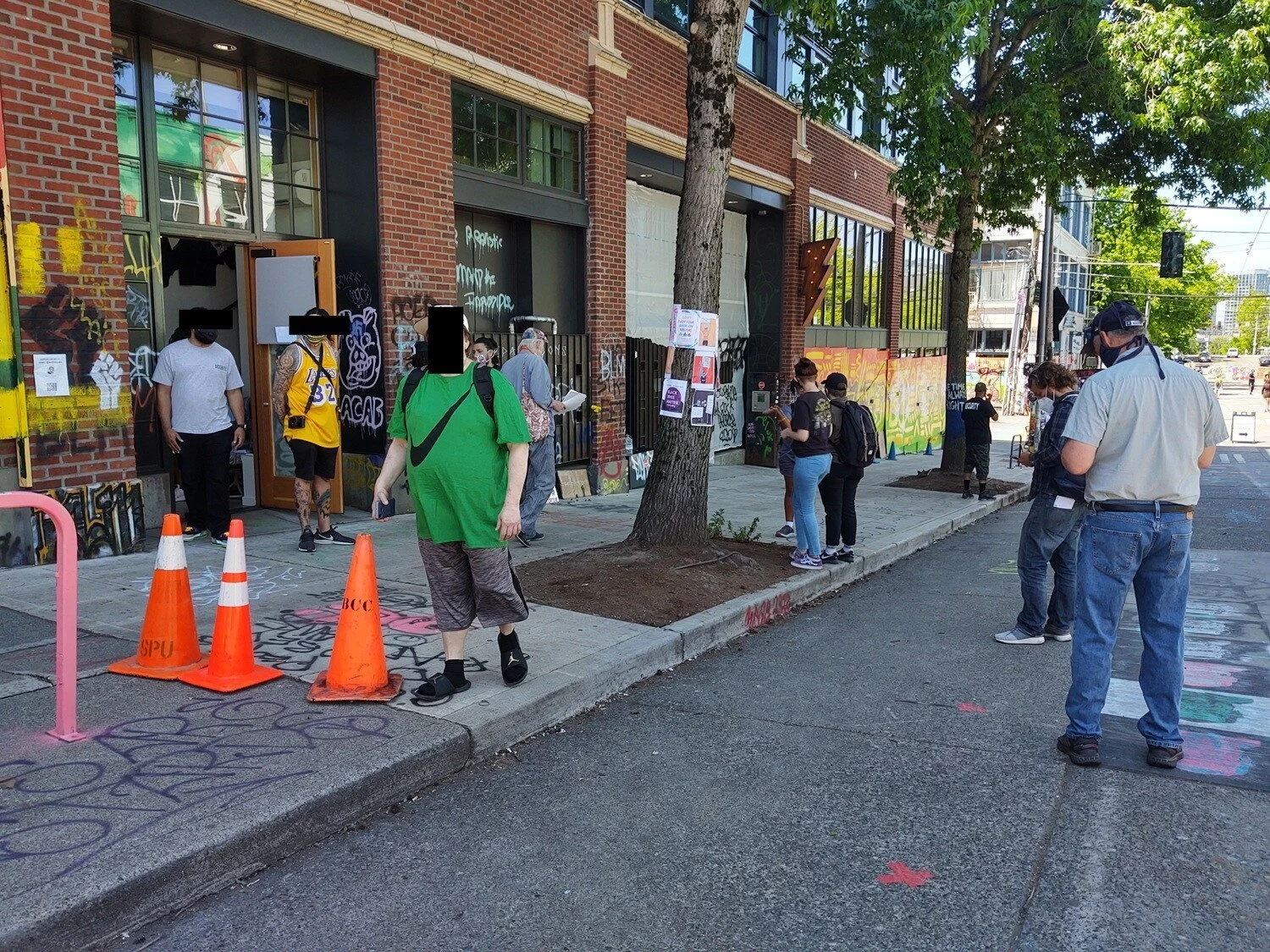
The next day, I went to the press conference to do some last-minute coaching with Kandy. The event was at the Capitol Hill offices of a local news outlet. This outlet had covered CHAZ/CHOP extensively. A lot of press was there, which was very exciting. The doors to the building were open, but they were being guarded by staff.
Leah, Kandy, Kim, and an activist from the encampment were there, and they were all allowed inside. The staff wouldn't let me in. I was pretty damn irate about it, but I had to focus on my goals. I was only interested in the journalist’s questions after the speech; I needed to get somewhere to watch the press conference.
I saw a person who I hadn't met walking around the entryway of the building, giving directions to my colleagues from the collective. He didn’t work for the outlet. I got Leah's attention and asked who this person was. She said it was a friend of hers who worked in media relations and had helped organize the press conference. At what point had they obtained a media relations specialist? No one had told me about this person, and I had not had an opportunity to huddle with them to make sure we were on the same page. There was no time to do it right then (and I never saw this person again).
I watched the press conference at home. Kandy did fine; nothing to write home about. Certain people in the room didn’t follow agreed-upon instructions, which were essentially that they should be quiet and not talk. But the moment I was hoping for never came. I had put a few lines into the speech that referenced the meetings, and the money. I hoped that a journalist would ask questions about it, but no one did. I suppose I was far too subtle.
The speech insisted that we wouldn’t be bought. The irony that it was delivered by someone who had agreed to accept money was an irony that only I knew, sitting on my bed in my studio apartment, watching my freely provided labor amplify voices that would later go on to smear my name, label me mentally ill, and fed-jacket me.
Last update: June 15, 2026