Part 8: The end of CHOP
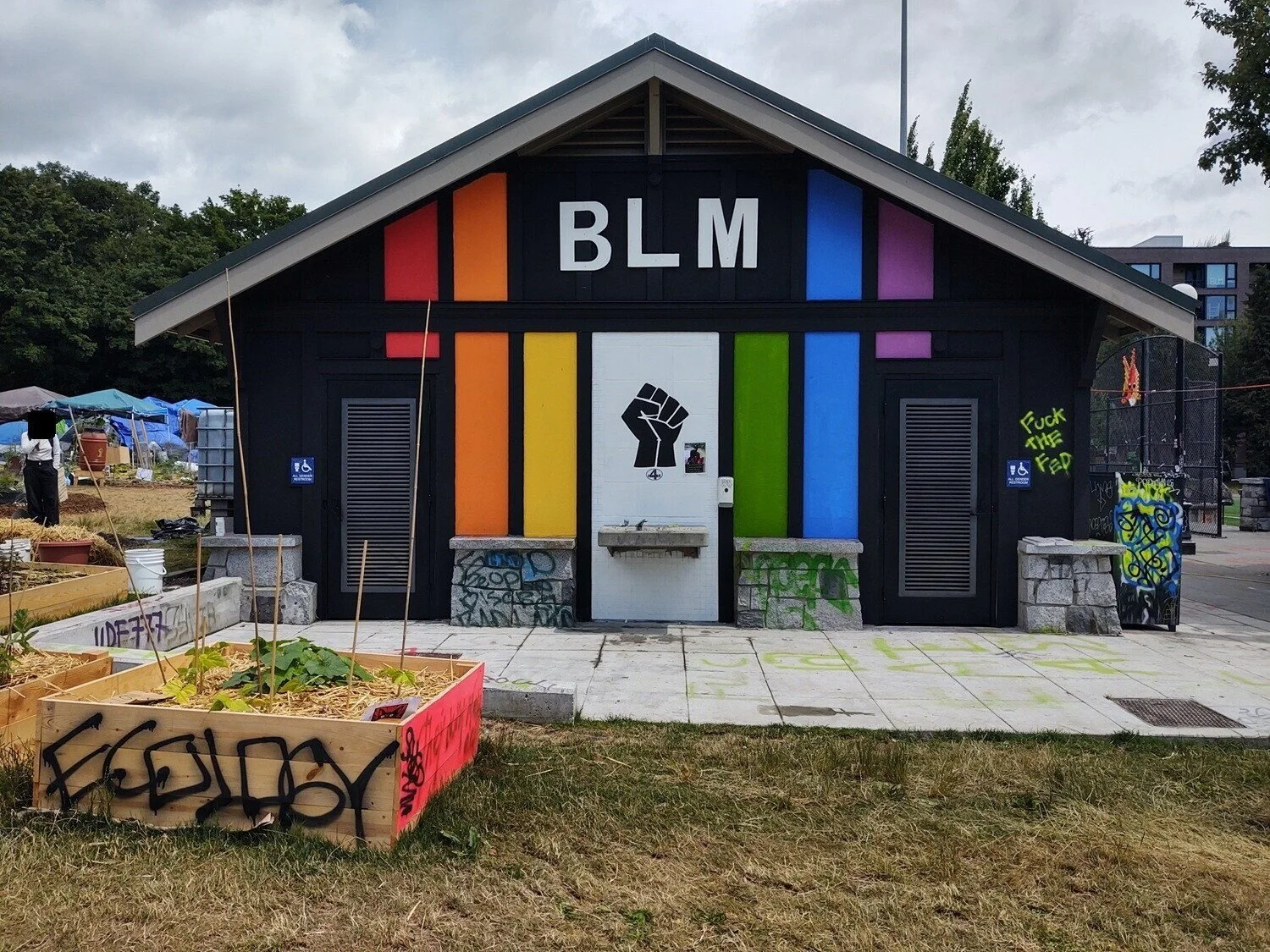
Restrooms in Cal Anderson Park decorated with Pride and BLM imagery, June 2020. All photos: Tarika Powell
This is part 8 in the series COINTELPRO in the Digital Age. In this essay:
Black activists are busy outside the encampment;
I’m given a recording of a secret meeting;
Officials hold another secret meeting with another group;
A whirlwind week ends with the shooting death of a teenager
Note: These essays reflect the author's present recollection of events. Some names and characteristics have been changed.
Previously in this series: "Unbought, Unbossed, Unwelcome" (10 minute listen)
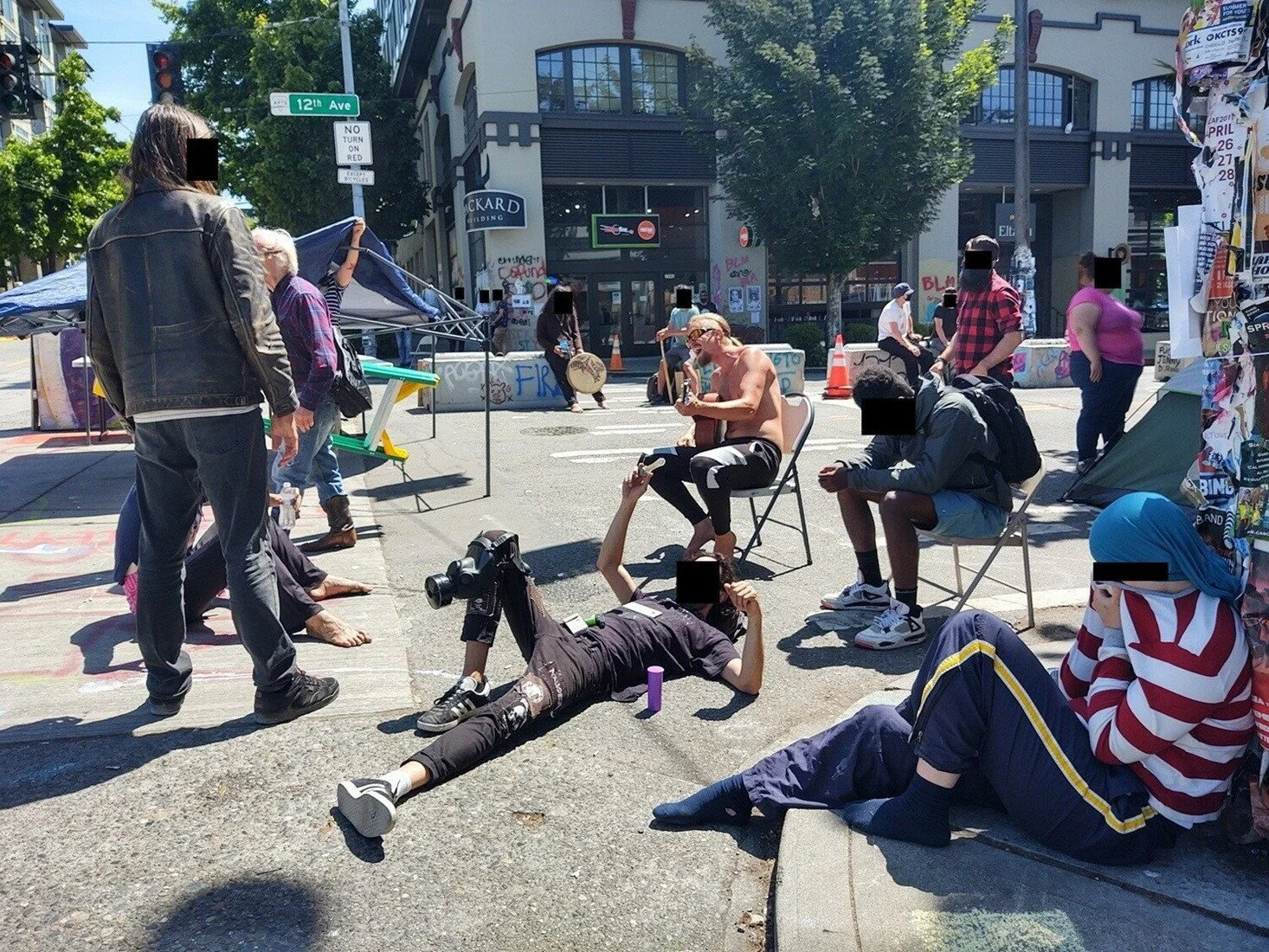
We were now a week out from the end of CHOP. The protesters still involved were hoping to get at least one of our demands met. We did not know how things were going to end, but we knew it was ending.
The collective put on a large event several miles from CHOP. Every committee was busy. We had to borrow and set up equipment, coordinate with other advocacy groups and vendors, and do promotion. The turnout was amazing. Many attendees had come to the encampment before the shootings started and they wanted to still be a part of that type of protest. We had a version of the conversation cafe, a free library, educational materials, and local vendors. There were learning activities, speeches, and opportunities to connect with others.
The event captured the beauty of CHAZ at the beginning. It was an amazing feeling compared to what CHOP had become: a concentrated reflection of all the untended problems of the city of Seattle. We inherited systemic issues that the city had failed to solve with hundreds of millions of dollars and decades worth of time, and were being blamed for not solving them through a few weeks of mutual aid. We had become a place for the unhoused to escape the Seattle Police Department's violent sweeps, and we were being blamed for people living in tents in the park, as well as cars parked on the field. We were being blamed for gun violence around Cal Anderson, when there was a history of shootings in that area, many of them occurring in the summer months. One local official went so far as to try to pit the LGBT community against the Black community, falsely claiming that BLM protesters were painting homophobic slurs around Capitol Hill. (No evidence of this claim was ever presented to my knowledge, and furthermore, a lot of BLM protesters in Seattle were a part of the queer community, so it was a divisive binary that erased the fact that people could be a part of both communities.)
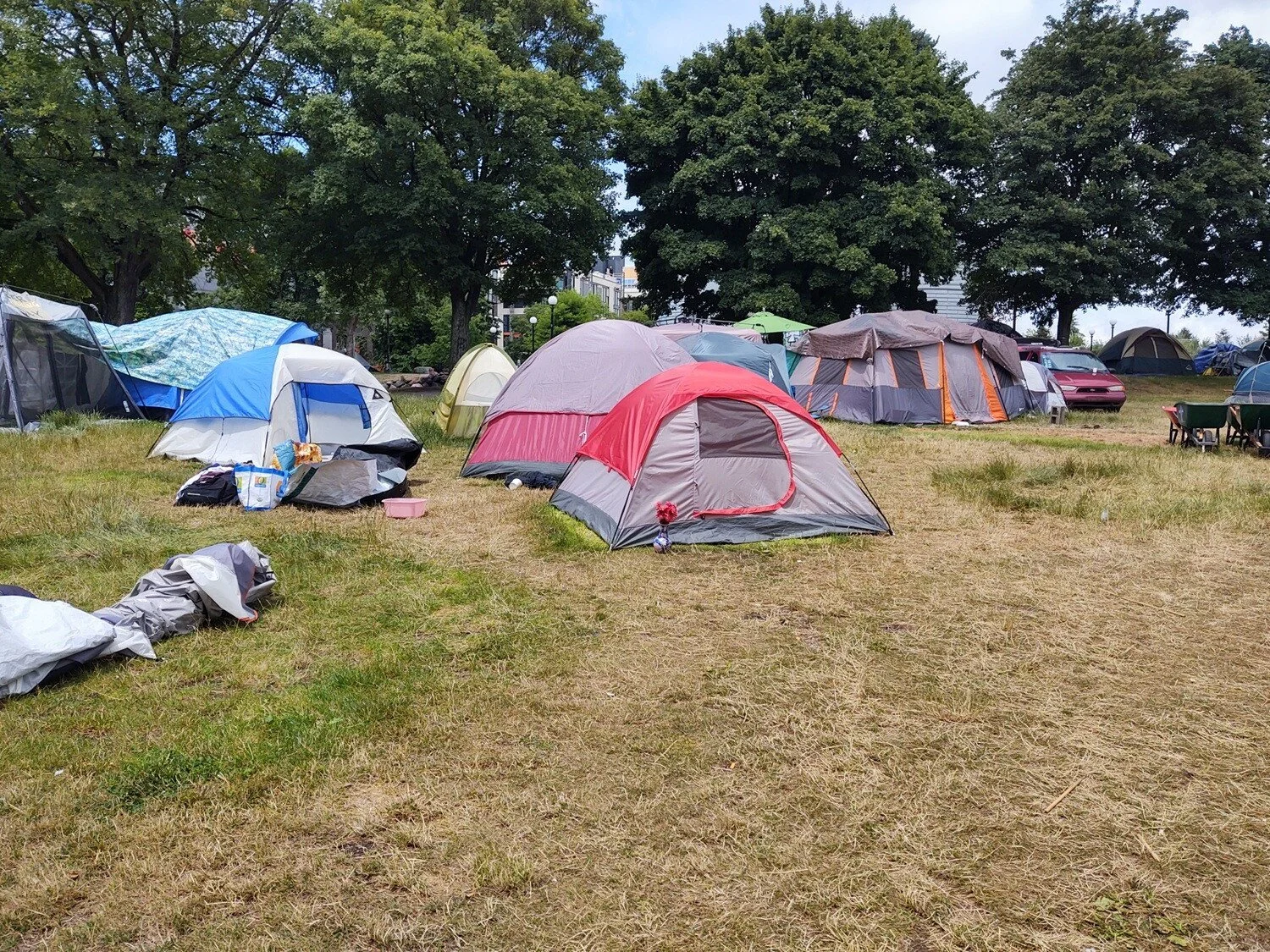
Tents in Cal Anderson Park on June 28, 2020
The Recording
After our successful first event, we immediately started planning another one. While we were building up the collective, the Democrat and Mr. Charles were busy with another type of messaging. A few hours after we canceled the meeting at the Democrat’s office, they held a press conference. They told a version of what had happened, saying they had reached an agreement with the protesters but some agitators intervened. They made it seem like we would not listen to reason. Their version of the story didn't mention the million dollars.
After these public statements, I was sent a recording of the meeting with Mr. Charles. I listened to a portion of it. I offered to leak the recording to the press, while protecting their identities, if people on the tape agreed. At least one agreed. I started transcribing the recording and waited to get consent from the other parties. The Collective was extremely busy, so while I waited to get consensus, I had a million other things to do.
The final days
Despite the workload I had with the collective, I went to the encampment a few times that week, though I spent far less time there per visit than I had in prior weeks. It felt like a ghost town. The vast majority of protesters had abandoned the space. The garden was still there, and people were still tending the garden. There was really nothing else to give my labor to, so I offered to volunteer with them, but they had plenty of help already.
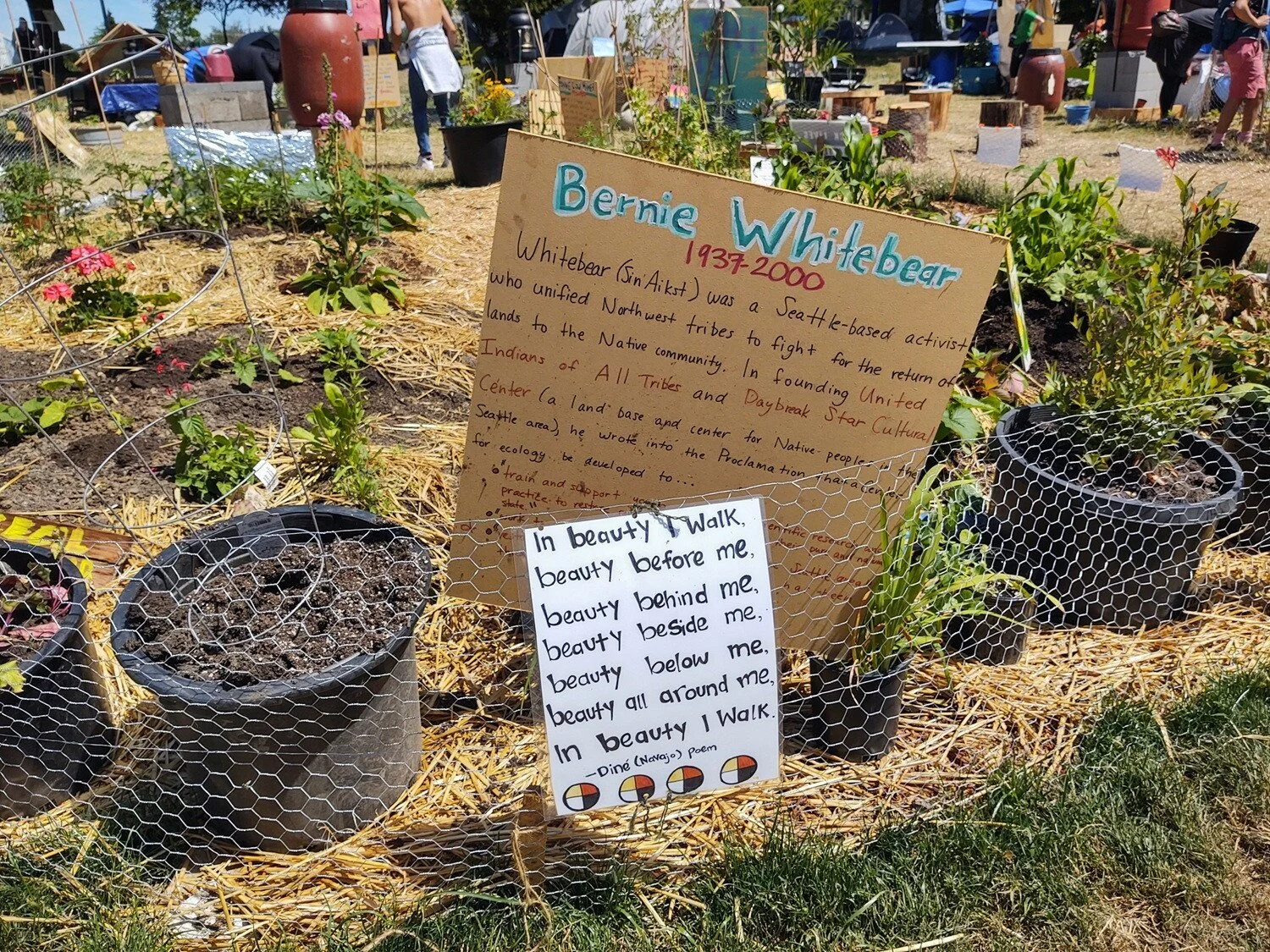
Tribute to Bernie Whitebear at CHOP garden
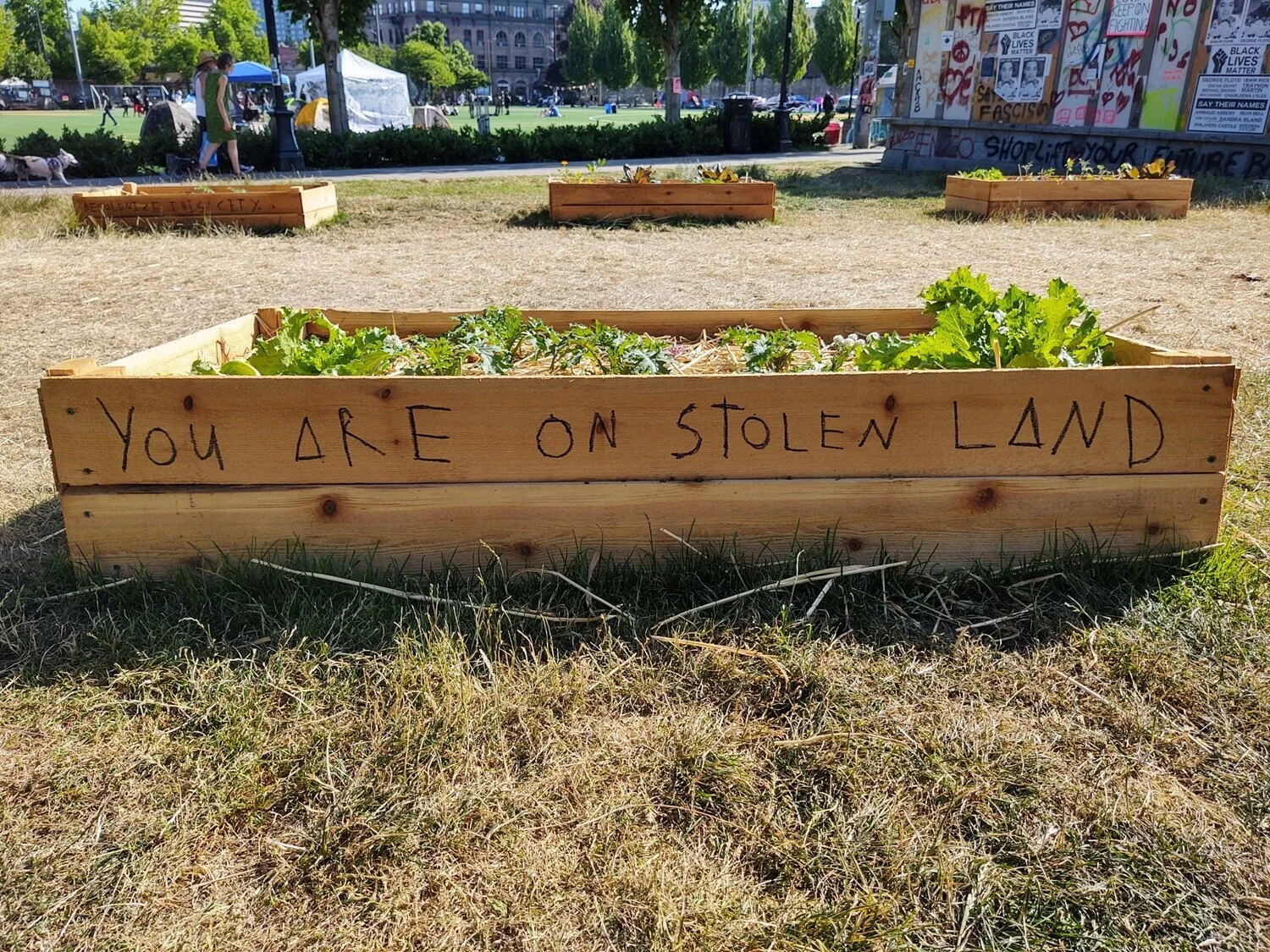
Raised beds in the CHOP garden
I bumped into the fire chief in CHOP and grilled him about the barricades that had been installed on Pine Street as well as the City's public statements that they were negotiating with protesters about these decisions. I asked the chief to stop talking to random people and claiming he had spoken to protesters, and I asked him when the City was going to have meaningful conversations with us. He gave me a conciliatory answer. Unbeknownst to me, the chief was on his way to a closed-door meeting with the mayor and a random group of protesters right then. After the meeting, the City announced that they had been unable to reach an agreement with protesters, and reiterated their intent to close down CHOP.
People who weren't a part of this meeting had no idea how it was arranged. Why was it a closed-door meeting? To be clear, I'd had the exact same objections to my allies attending meetings no one else knew about. My feelings were consistent whether I was friendly with the meeting's participants or not.
A few uninvited people made their way into this meeting, and photos leaked out. Many people did not feel that this group was representative of the protesters, nor that they could adequately represent us in a meeting with city officials. I saw a lot of angry and funny tweets responding to the photos, most of them balking at the participants. One tweet said, "One opp, two opp, red opp, blue opp." I still laugh at that to this day, so I'll refer to it as the "OTRB meeting" (one, two, red, blue).
The final time I went to CHOP was on June 28. I didn’t stay long. I met Leah there, and we took a Lyft to a protest at one of Seattle's colleges. The event started at the campus with speakers and dancing, and then we marched. Leah and I got separated. She wandered off while distracted texting on her phone and I chose not to follow her.
I met a young trans woman at the protest. She kept looking at me. Finally she said that I resembled women in her family, women she loved who she had experienced rejection from. I was aware that Black queer youth had become reserved around me once I reached my mid-30s, the age of some of their parents. Most of the elders in the lives of our youth are homophobic. But I had never been told that I literally looked like someone’s pain.
After listening to her story, she and I hugged. I quietly processed the shock that I was now old enough for college students to see me as a maternal figure. We held hands and marched together. We walked for what seemed like hours, holding onto each other like we knew each other well, and neither of us would be leaving. I wondered if she needed someone to look after her, and whether I had the capacity.
Leah let me know she was ready to head back to Capitol Hill. The girl and I said goodbye. As we rode back together in the backseat, Leah talked about her personal life. I didn't say much.
The second half of the day was settling in, slower than it did most months in Seattle. Soon the sun would be setting on CHOP, and on the last day in the life of a teenager named Antonio Mays, Jr. Sixteen-year-old Antonio left his home in California during the second week of the encampment to join the protests in Seattle. He left his father a note saying he wanted to join the movement, but didn't tell him where he was going. On the night of June 29th, he hijacked a car along with a 14-year old teen. The boys drove back to CHOP and crashed into the barricades, whereupon both of them were shot multiple times.
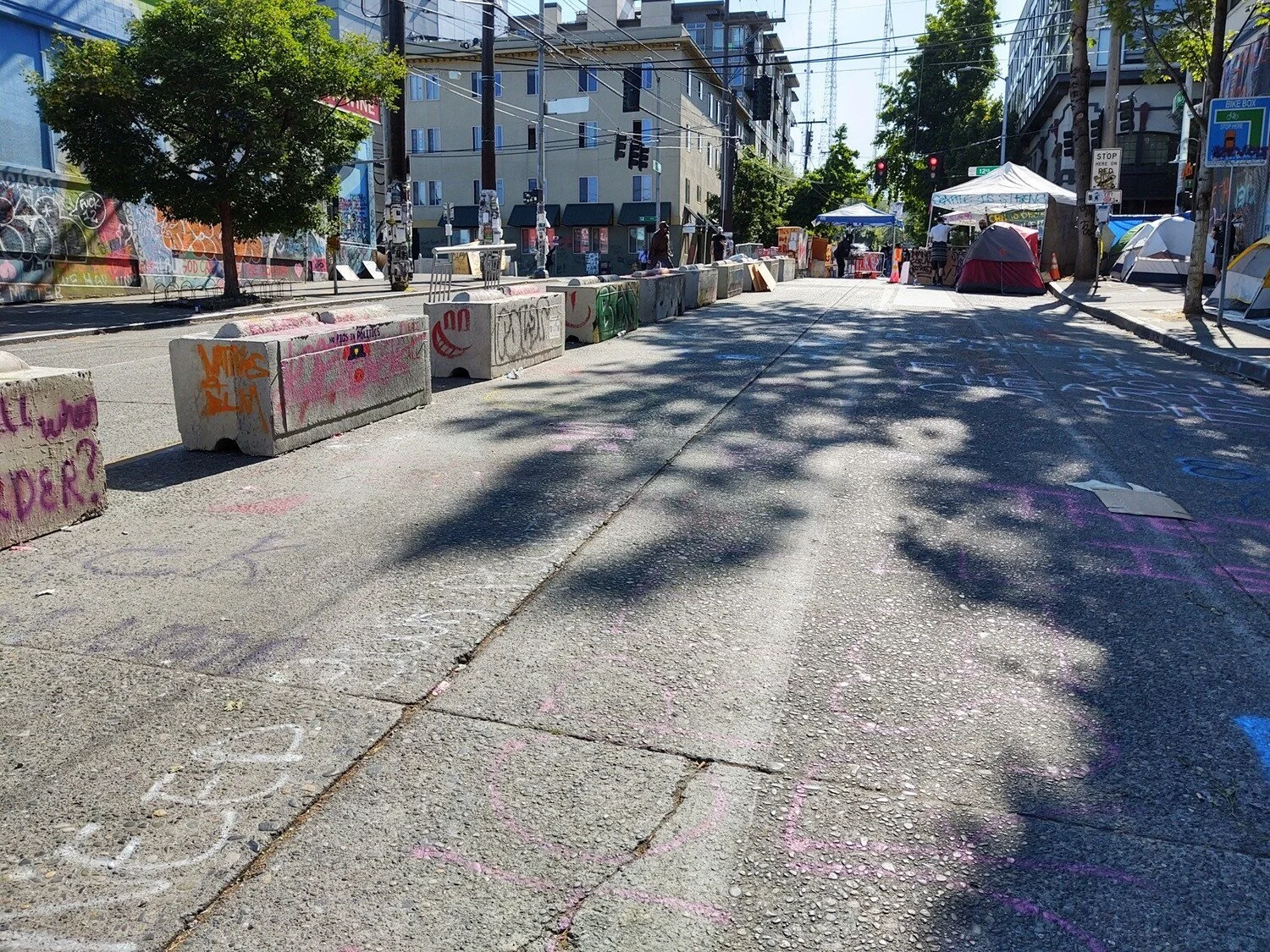
A sparse presence on Pine St on June 26, 2020
Many details around the Mays shooting are still unclear. The boys were apparently shot by members of the protest security team. No one has ever been charged. In 2026, Mays' father was awarded $30 million in a lawsuit against the city of Seattle because first responders failed to render timely aid, as they had when Lorenzo Anderson was shot. Protest medics rendered aid, and tried to meet up with paramedics again. They had to transport the victims away from the protest via private vehicles.
Antonio Mays never arrived at the protest he left home to join. He had been there less than ten days when he was killed, meaning he left California around Juneteenth. By June 29th, most of the protesters were no longer there. CHOP didn’t have a plethora of hot food vendors anymore. It didn’t have overstocked non-perishable food stations. The donations had dried up, both drop-offs and money. The couch and chairs from the conversation cafe were pushed onto the sidewalk amidst other items that were moved out of the street to install the concrete barricades. There were no more speakers on Cal Anderson field, no live music, and no crowds.
By and large, white leftists and liberals disengaged from CHOP after Lorenzo Anderson was killed. While I can understand this, there is also much to criticize about the way they abandoned us. Leftists were a big portion of the support for the unhoused population in the encampment, and they not only stopped providing services like mutual aid, they just unceremoniously stopped supporting everyone who had committed to the space.
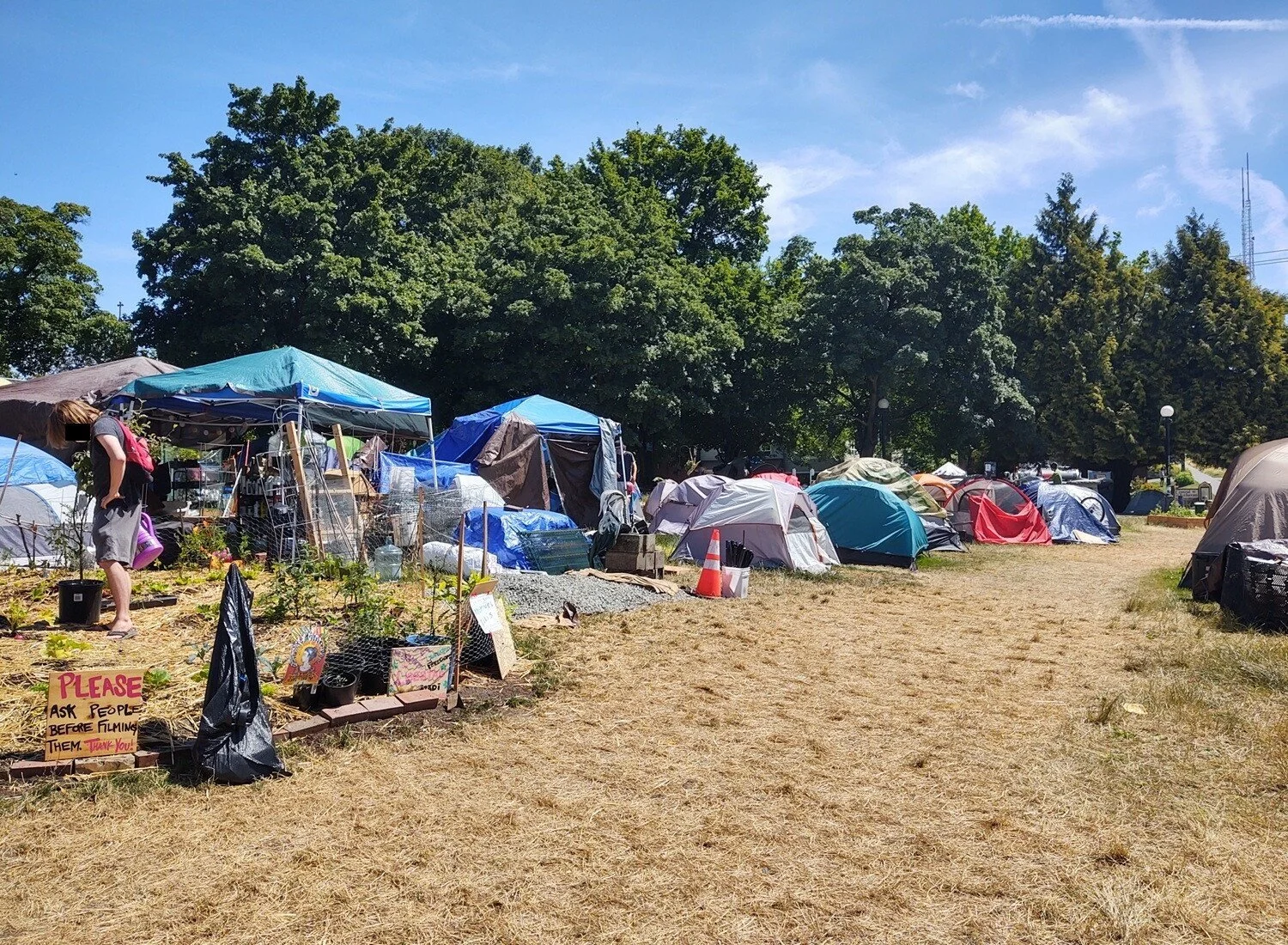
Back of Cal Anderson Park
CHAZ was guided by leftist principles, and those principles were held in place by people who held those principles. When most of the leftists left, there were no clear principles guiding the occupation. Other protesters tried to maintain the prevailing politic of the space, but we lost to a more authoritarian approach, and more people went away.
A team of women and queer folks formed an alternate security team focused on individual needs, deescalation, and keeping the space safe for vulnerable populations, but they struggled greatly. I went to one of their meetings towards the end. They were crying.
CHOP was shut down by the city on July 1, 2020. At least thirty people were arrested. Right wing media cheered that the police had taken back control of “their city.” The cops certainly made a big display of things for the evening news. But if you were there, you’d know that it was less of a showdown with protesters than it was an aggressive sweep of a homeless encampment.